Motivation is a Skill, Not a Personality — Here’s How to Coach It — Pillar 2
Some athletes seem naturally motivated.
They arrive early. They bring energy. They attack the work.
Other athletes appear inconsistent, distracted, or hard to reach. The common coaching conclusion is, “That kid just is not motivated.” I want to challenge that label.
Motivation is not a fixed personality trait. It is a state we can influence and a skill we can help athletes build.
And one of the most important truths about motivation is this: Motivation often comes after action—not before it.
Athletes wait to feel ready. Elite performers learn how to start. The start stops most people.
Today I will show you how to coach motivation and commitment through purpose, environment, small starts, visible progress, and repeatable routines—all connected to the 10 Pillars of Mental Performance Mastery.
Motivation And Commitment Are Different
Motivation is the desire or energy to act. Commitment is the decision to keep acting when that energy changes.
Motivation is valuable, but it is unreliable. It rises after a win. It falls after disappointment. It changes with sleep, stress, relationships, confidence, and results.
Commitment gives athletes a bridge across those changing feelings.
A motivated athlete says, “I feel like training.” A committed athlete says, “This is the person I am choosing to become, so I know my next action.” We want both.
Use motivation to create energy. Use commitment to create consistency. The coaching mistake is demanding that athletes feel motivated every day. They do not need the perfect feeling.
They need a clear reason, a doable start, and a structure that keeps behavior moving.
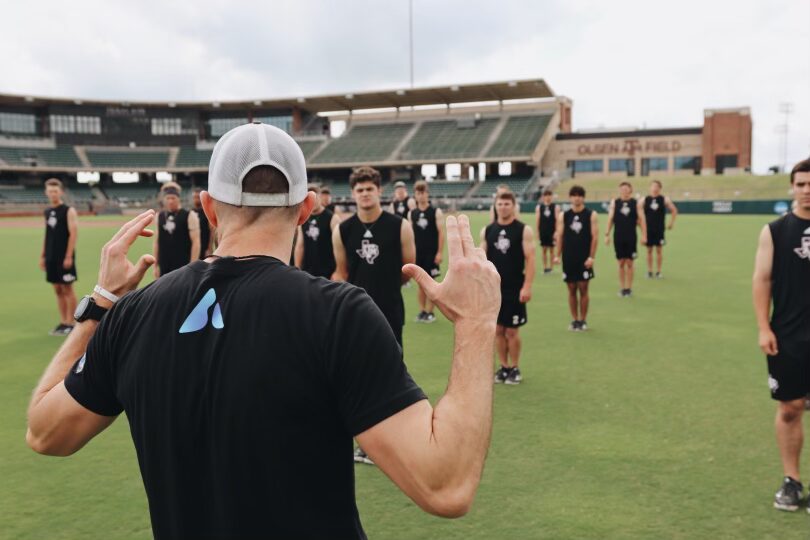
Taking Texas A&M Baseball through on Field Culture Work
Why Labels Make The Problem Worse
When a coach calls an athlete lazy or unmotivated, the label hides useful questions.
- Does the athlete understand why the work matters?
- Does the athlete believe improvement is possible?
- Is the first step too vague or too large?
- Does the environment make the desired behavior easy or difficult?
- Is there a skill deficit being mistaken for an attitude problem?
- Is the athlete exhausted, overwhelmed, or afraid of failing publicly?
A label ends curiosity. Good coaching begins curiosity. An athlete who avoids extra shooting may not hate work. She may not know what to practice.
A pitcher who delays his throwing program may not lack ambition. He may be anxious about pain or discouraged by slow progress.
A student-athlete who misses recovery work may have no plan for the transition from school to practice.
Diagnose before you judge. Then coach the smallest useful behavior.
Action Creates Motivation
Most people use this sequence: Feel motivated. Take action. Get a result.
High performers learn a more reliable sequence: Take a small action. Create momentum. Feel more motivated. Get evidence. Repeat.
Think about a warmup. Athletes do not always feel explosive before the first movement. But after five minutes of purposeful action, the body and mind change.
The action helped create the state. That is why the first goal is not to finish everything. The first goal is to begin. Put on the shoes. Open the training plan. Complete one concentration grid. Take three deliberate breaths. Do the first five minutes. Starting lowers resistance and gives motivation a chance to follow.
Use B=MAP To Design Behavior
A helpful behavior model is B equals MAP. Behavior happens when Motivation, Ability, and a Prompt come together.
If the desired behavior is not happening, do not only add more motivation speeches.
Check all three elements.
Motivation: does the athlete have a meaningful reason?
Ability: is the behavior clear and manageable with current skill, time, and energy?
Prompt: what reminds the athlete to act at the right moment? Imagine you want athletes to complete five minutes of mental imagery before bed.
Motivation might be the connection between imagery and confidence in the next competition. Ability improves when the exercise is short and guided. The prompt could be placing headphones on the pillow or attaching the imagery to brushing teeth. Now the environment supports the behavior.
If the routine fails, adjust the design instead of attacking character. Make it smaller. Make it clearer. Make the prompt visible. Reconnect it to purpose.
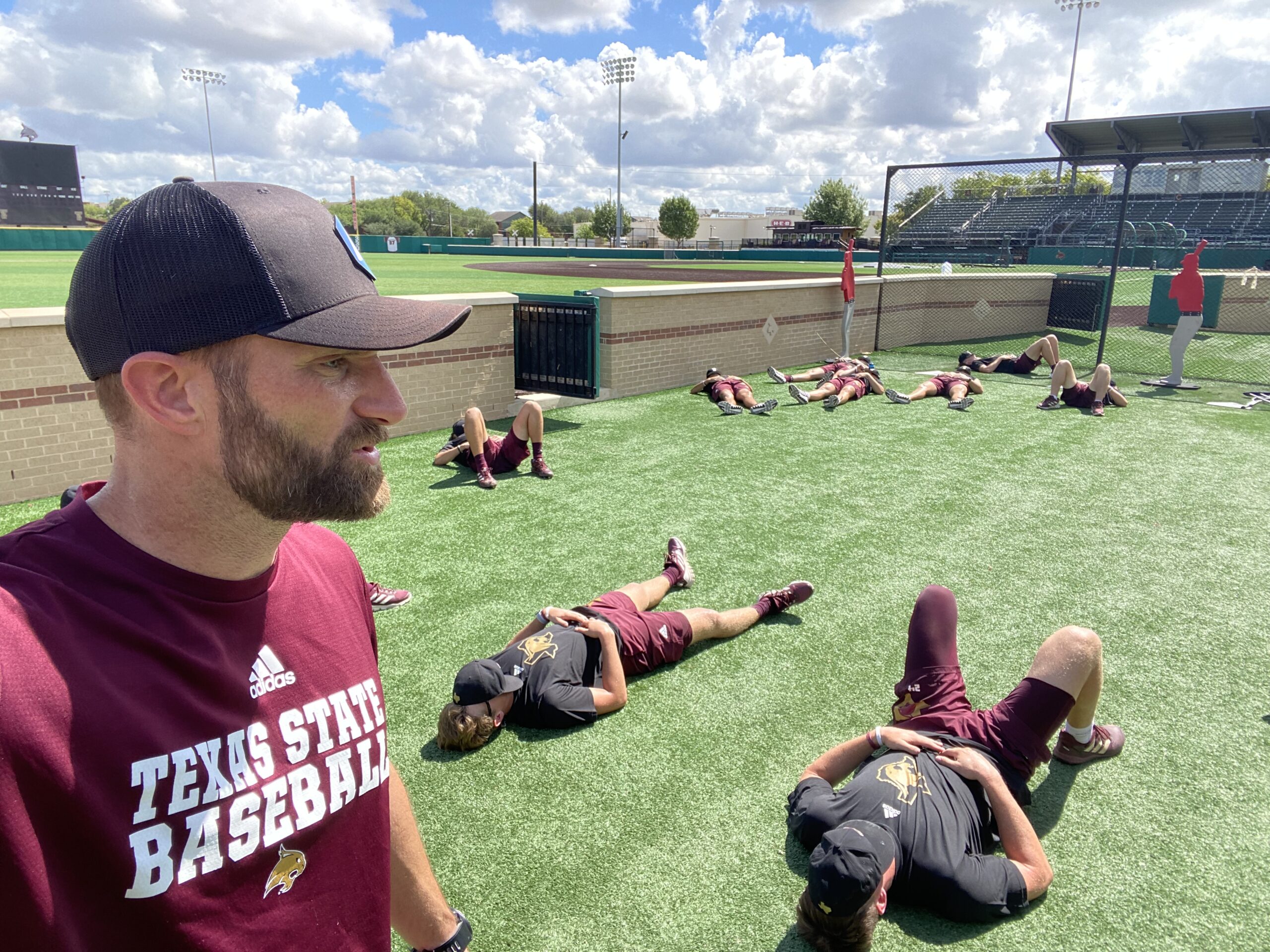
Taking Texas State Baseball through a Mental Imagery Session
Start With Why—Then Make Why Personal
Coaches often explain why a drill matters technically, but athletes also need a personal connection. Ask:
- What do you want from this season?
- Who are you trying to become?
- Who benefits when you become that person?
- What are you unwilling to leave to chance?
A borrowed goal produces fragile motivation. An owned goal creates energy. That does not mean the athlete chooses every standard.
Team membership includes non-negotiables. It means the coach helps the athlete connect the standard to something personally meaningful.
A recovery routine is not simply “because coach said so.” It protects the body that must perform the athlete’s dream.
A study plan is not separate from sport. It reduces stress and preserves attention for training. Purpose helps hard work make sense.
Visible Progress Builds Belief
Motivation grows when athletes can see evidence of progress. If the only evidence is playing time, rankings, or wins, many days will feel empty.
Track controllable indicators. Routine completion. Quality reps. Sleep consistency. Concentration-grid scores. Reset speed after mistakes. Strength or mobility targets. Use a success checklist and a simple streak or scorecard.
The purpose is not perfection. The purpose is evidence. Evidence creates belief. Belief increases willingness to act. Action creates more evidence. That is a productive motivation loop.
But be careful: do not turn the scorecard into shame. Missed days are data. Use the next best decision. Never miss the restart.
Create Identity Through Language
Behavior becomes more stable when it connects to identity.
Instead of, “I have to do recovery,” the athlete says, “I am an athlete who prepares for tomorrow.”
Instead of, “I should focus,” say, “I am someone who returns attention.”
Instead of, “I am trying to be disciplined,” say, “I keep small promises to myself.”
Identity is not wishful thinking. It must be supported by evidence. Every completed action is a vote for the identity. One early arrival does not transform a career. But repeated arrivals create a pattern. The pattern becomes a reputation. The reputation becomes self-trust. Coaches can reinforce identity specifically.
“That is what commitment looked like today. You were disappointed about your role and still completed the plan with detail.” Name the evidence.
[THE ROLE OF AUTONOMY, CONNECTION, AND COMPETENCE] Motivation strengthens when athletes experience three things.
Autonomy: I have some ownership in how I pursue the standard.
Connection: I belong, and the people around me care about my growth.
Competence: I can see that I am learning and improving. Give bounded choices. “Do you want to complete imagery before lifting or after?”
Use accountability partners so athletes are not pursuing change alone. Scale tasks so early wins are possible without making the standard meaningless. Connection does not lower expectations. It creates a stronger bridge to them.
What To Do On Low-Motivation Days
Give athletes a minimum viable standard. This is the smallest version of the behavior that keeps the identity alive.
If the full routine is twenty minutes, the minimum might be three minutes.
If the full workout is impossible because of travel, the minimum might be mobility, breath work, and the most important movement.
This is not permission to choose the minimum forever. It prevents an all-or-nothing mindset.
Athletes often think, “If I cannot do it perfectly, there is no point.”
The elite response is, “What is the best available action today?”
Consistency is not doing the same volume under every condition. Consistency is maintaining the relationship with the standard.
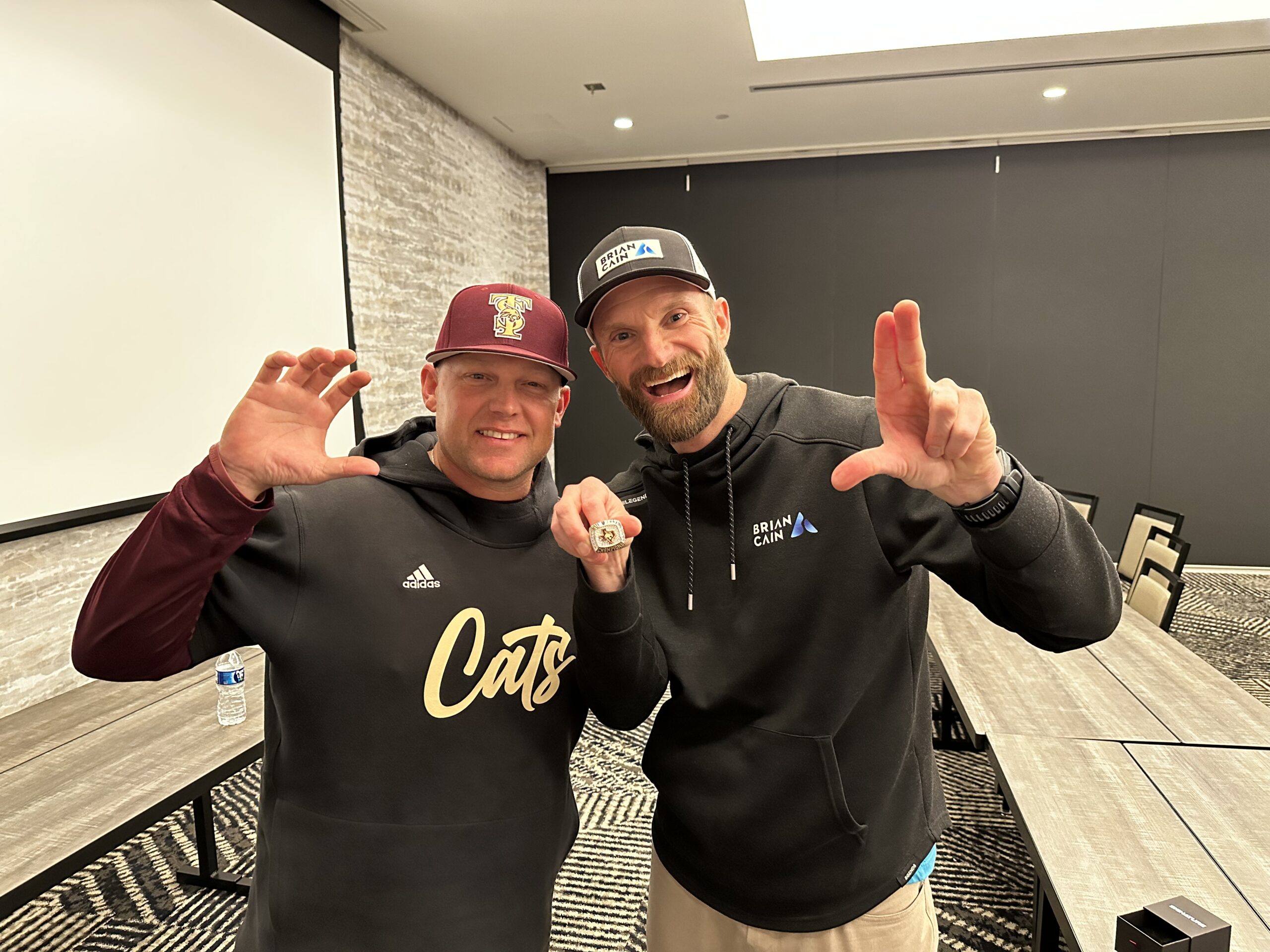
Working with TX State Baseball coach Stephen Trout on Culture and Process
The Direct Tie To All 10 Pillars
Pillar 2 is Motivation and Commitment.
Pillar 1, Elite Mindset, replaces identity labels with curiosity and ownership.
Pillar 3, Focus and Awareness, helps athletes notice distraction and reconnect with purpose.
Pillar 4, Self-Control and Discipline, carries action across low-feeling days.
Pillar 5, Process Over Outcome, makes progress visible through controllable behaviors.
Pillar 6, Mental Imagery and Meditation, helps athletes emotionally connect to the person and performance they are building.
Pillar 7, Routines and Habits of Excellence, reduces the need to negotiate with motivation.
Pillar 8, Time Management and Organization, gives desired actions a real place in the calendar.
Pillar 9, Leadership, uses connection, communication, and example to bring out commitment in others.
Pillar 10, The Right Culture, makes purposeful effort and honest accountability normal.
Motivation becomes more reliable when all ten pillars support it.
Common Coaching Mistakes
Mistake one is using fear as the only fuel. Fear can produce a short burst of action, but it rarely builds ownership.
Mistake two is giving speeches without changing the environment. Inspiration fades. Design remains.
Mistake three is making the first step too large. Shrink the start, not the goal.
Mistake four is rewarding only outcomes. Recognize preparation, response, and commitment.
Mistake five is expecting one strategy to motivate everyone. Know your athletes. Ask questions. Tailor the prompt while protecting the standard.
A Seven-Day Motivation Plan
Day one: remove the label and diagnose motivation, ability, and prompt.
Day two: connect one team standard to the athlete’s personal why.
Day three: define the smallest useful start.
Day four: install a visible prompt and attach the behavior to an existing routine.
Day five: track one controllable indicator and recognize evidence.
Day six: create an accountability partnership and a minimum viable standard.
Day seven: reflect: What created energy? What created friction? What will we adjust? Then keep doing a little a lot.
Implementation Notes for Coaches
The fastest way to install action-first motivation is to translate the idea into behavior that a camera could capture.
For this topic, look for a clear starting trigger, one easy first action, and visible evidence of progress.
Explain why those behaviors matter, demonstrate them, let the athlete personalize the language, and then evaluate the response in practice.
If the standard remains abstract, athletes will agree with it in a meeting and lose it when emotion, fatigue, uncertainty, or consequence enters the environment.
Use a simple progression: teach the response when the athlete is calm, rehearse it in a normal drill, and then pressure-test it.
One practical option is to design a low-motivation practice day in which athletes must begin with the smallest useful action and then track how action changes energy.
Keep the feedback tied to the controllable behavior. Ask,
- What did you do well?
- What could you do better?
- How will you make that improvement on the next rep?
That Well-Better-How review protects accountability while keeping the athlete connected to growth.
This is also where Pillar 2 — Motivation and Commitment becomes part of the daily culture instead of a lesson athletes hear once.
Model the response as a coach, reinforce it when the outcome is good and when it is not, and measure improvement over time.
Do a little a lot. Repetition makes the response available when the athlete needs it most.
The Standard Going Forward
Motivation is not something a lucky athlete has and an unlucky athlete lacks.
It can be influenced. It can be designed. It can be practiced. Connect action to purpose. Make the start small and clear. Build ability. Create a prompt.
Show the athlete evidence of progress. Use commitment when feelings change. The start stops most people.
Teach your athletes how to start—and how to keep the promise after the excitement is gone.
Your Next Step!
If you are a coach looking to master mental performance coaching, the missing link in your clients’ and athletes’ performance, join my MPM Coaches Insiders List and receive my best strategies for coaching mental performance and save $200 off my MPM Certification Course when it opens this fall.
💻 Join my MPM Coaches Certification Insiders List & Save $200
👍 Take my FREE 3 Day Coaches Mini-Course