How to Build the Daily Routines that Practically Guarantee Progress Toward a Goal
Goals create direction. Daily routines create progress. Athletes love the goal-setting moment. The championship. The scholarship. The starting role. The personal best. The comeback.
The goal feels exciting because it shows the destination.
But the destination does not tell the athlete what to do at 6:15 tomorrow morning. That is the job of a routine.
No routine can literally guarantee an outcome. Sport contains opponents, injuries, selection decisions, and uncertainty.
But a well-designed daily routine can practically guarantee something important: that the athlete repeatedly takes the controllable actions most likely to create progress.
Today I will show you how to reverse-engineer a goal into daily behaviors, schedule them, prompt them, measure them, and adjust them through Pillar 7 of the Mental Performance Mastery system.
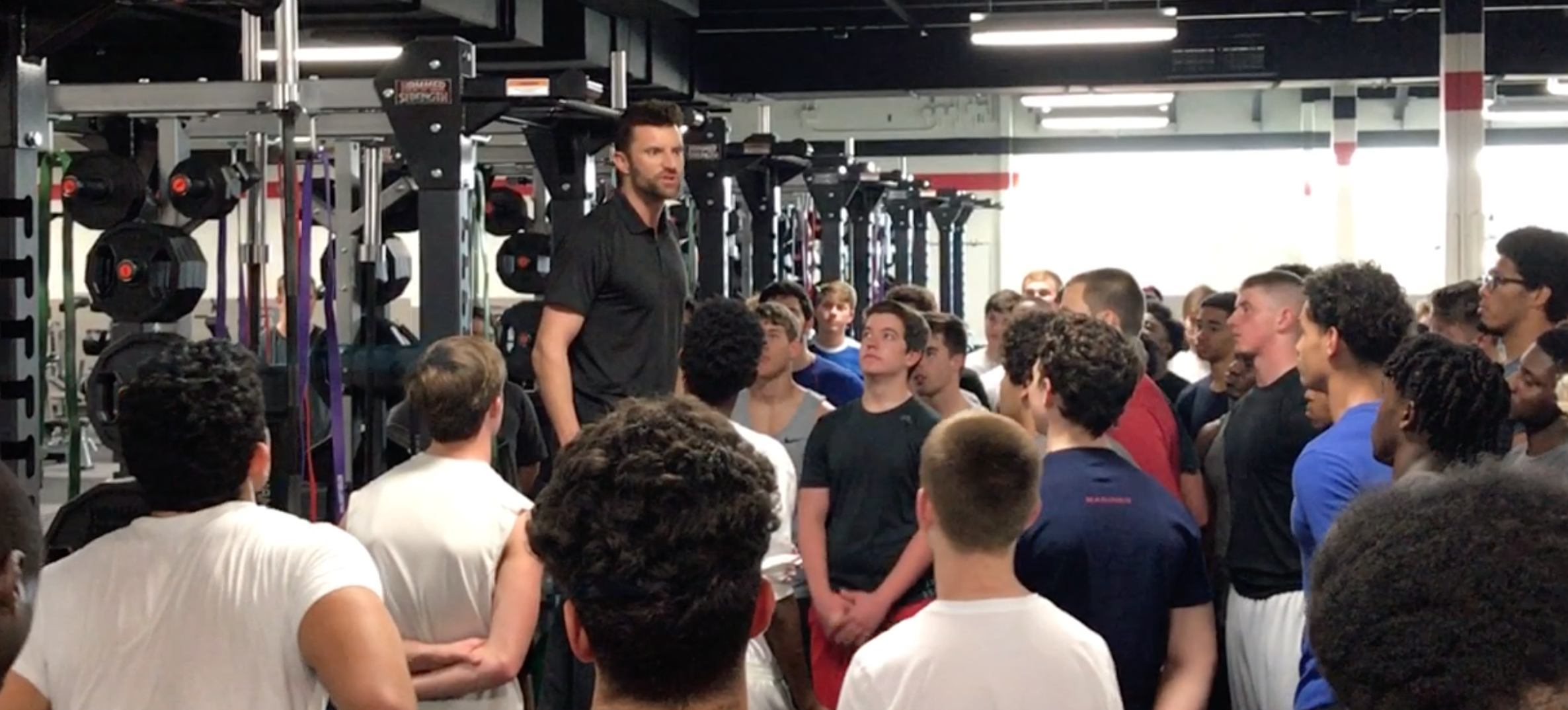
Speaking to a football team at Arlington Martin HS in Texas
Goals Do Not Execute Themselves
A goal is a desired future outcome. A system is the set of repeated actions that moves us toward it.
The athlete says, “I want to be an All-American.” That is inspiring, but it is not yet actionable. Ask:
- What would that level of performer do each week?
- What physical qualities must improve?
- What technical skill must be trained?
- What mental skill must be practiced?
- What recovery behavior protects the work?
- What academic and organizational habits reduce stress?
Now translate those weekly actions into calendar blocks. The goal becomes useful when it changes today’s behavior.
Reverse-Engineer The Path
Start at the destination and work backward. Suppose a runner wants to peak for a championship in sixteen weeks.
- What must be true in week sixteen?
- What training, recovery, and confidence evidence must exist by week twelve?
- What foundation must be built by week eight? What begins this week?
- Then come all the way down to today. What is the most important action today?
This avoids two common problems.
The first is overwhelm: the goal feels enormous.
The second is fantasy: the athlete pictures the result without scheduling the work.
Reverse engineering creates the next 200 feet. The headlights do not show the entire trip, but they show enough road to keep moving.
Use The Four-Step Development Formula
Use four steps.
Step one: set the intention. Choose the specific behavior or skill and connect it to purpose.
Step two: schedule it. Put it on the calendar with a time and place.
Step three: measure it. Use a simple success checklist, score, or completion mark.
Step four: reflect and refocus.
- What happened?
- What did I learn?
- What is my next best adjustment?
Then repeat. Intention without scheduling is a wish. Scheduling without measurement creates ambiguity. Measurement without reflection collects numbers without learning. The complete loop turns action into development.
Design The Routine With B=MAP
Behavior happens when Motivation, Ability, and a Prompt come together.
Motivation: why does this routine matter now?
Ability: is the action realistic with the athlete’s current skill, time, and energy?
Prompt: what will trigger it? Imagine the routine is ten minutes of mobility after school.
The athlete cares because mobility supports pain-free training. Ability improves when the routine has five clearly demonstrated movements. The prompt is placing the school bag beside the mat before opening the phone. If the routine fails, improve the design.
Do not immediately attack character. Make the first step smaller. Prepare the equipment. Move the prompt. Reconnect to purpose.
Build Bookends And Anchors
Routines are easier to repeat when attached to stable moments. Use AM and PM bookends.
The AM bookend might include one breath, review of the three most important actions, and two minutes of imagery.
The PM bookend might include reflection, planning tomorrow tonight, packing equipment, and protecting sleep.
Use anchors during the day.
- After I brush my teeth, I complete the breathing practice.
- After class ends, I review the practice cue.
- After the final training rep, I begin recovery.
- After dinner, I complete the study block.
The format is if-then: If this existing event happens, then I begin this behavior. Anchors reduce the need to remember and negotiate.

Baseball coach addresses players on the mound
Make The Routine Small Enough To Survive
Athletes often design routines for their best day. Then travel, fatigue, school, or stress arrives and the whole system collapses.
Create two versions. The full routine. And the minimum viable routine.
The full mental routine may be fifteen minutes. The minimum may be one 6-2-8 breath, one minute of imagery, and one written intention.
The minimum is not the permanent standard. It keeps the relationship with the behavior alive.
Consistency does not mean identical volume in every condition. It means maintaining the identity and restarting quickly. Never miss the restart.
Measure Leading Indicators
Athletes often measure only lagging indicators: wins, times, rankings, statistics, or selection.
Daily routines should track leading indicators.
- Did the athlete complete the planned training?
- Did the athlete use the reset routine?
- Was sleep protected?
- Was recovery completed?
- Was the technical focus rehearsed?
- Did the athlete prepare tomorrow tonight?
A five-item success checklist can be enough. Use the checklist as a mirror, not a weapon.
The purpose is to see patterns. Maybe the routine disappears on late-practice days. Maybe the cue is hidden. Maybe the action is too large. Maybe the goal is not personally owned. Evidence helps the athlete improve the system.
Protect The Most Important Action
Every day has one action with disproportionate value. Call it the MIT: Most Important Task.
For an injured athlete, the MIT may be rehabilitation.
For a starting pitcher, it may be the day’s key work in the five-day cycle.
For a student-athlete during exams, it may be the study block that protects eligibility and reduces stress.
Schedule the MIT during the best available energy, not the leftover time.
Many athletes say something is a priority, then place it at the end of a crowded day. The calendar tells the truth about priority.
Use Accountability Correctly
An accountability partner should know the routine and ask for evidence. Not, “Are you being good?” Ask, “Did you complete the three behaviors?” If not, “Where did the system break, and what is your next best response?”
Accountability is not shame. It is a commitment to close the gap between intention and action.
Use a weekly review with Start, Stop, Continue. What should begin? What is creating friction and should stop? What is working and must continue?
Adjust one variable at a time when possible.
The Identity Loop
Every completed routine is a vote for identity.
- “I am an athlete who prepares.”
- “I am a teammate who keeps commitments.”
- “I am a person who returns after a miss.”
Self-trust is built from evidence. Athletes do not become confident because a coach says they should be.
They become more confident when they can point to preparation they completed, challenges they handled, and promises they kept. The routine creates progress and proof.
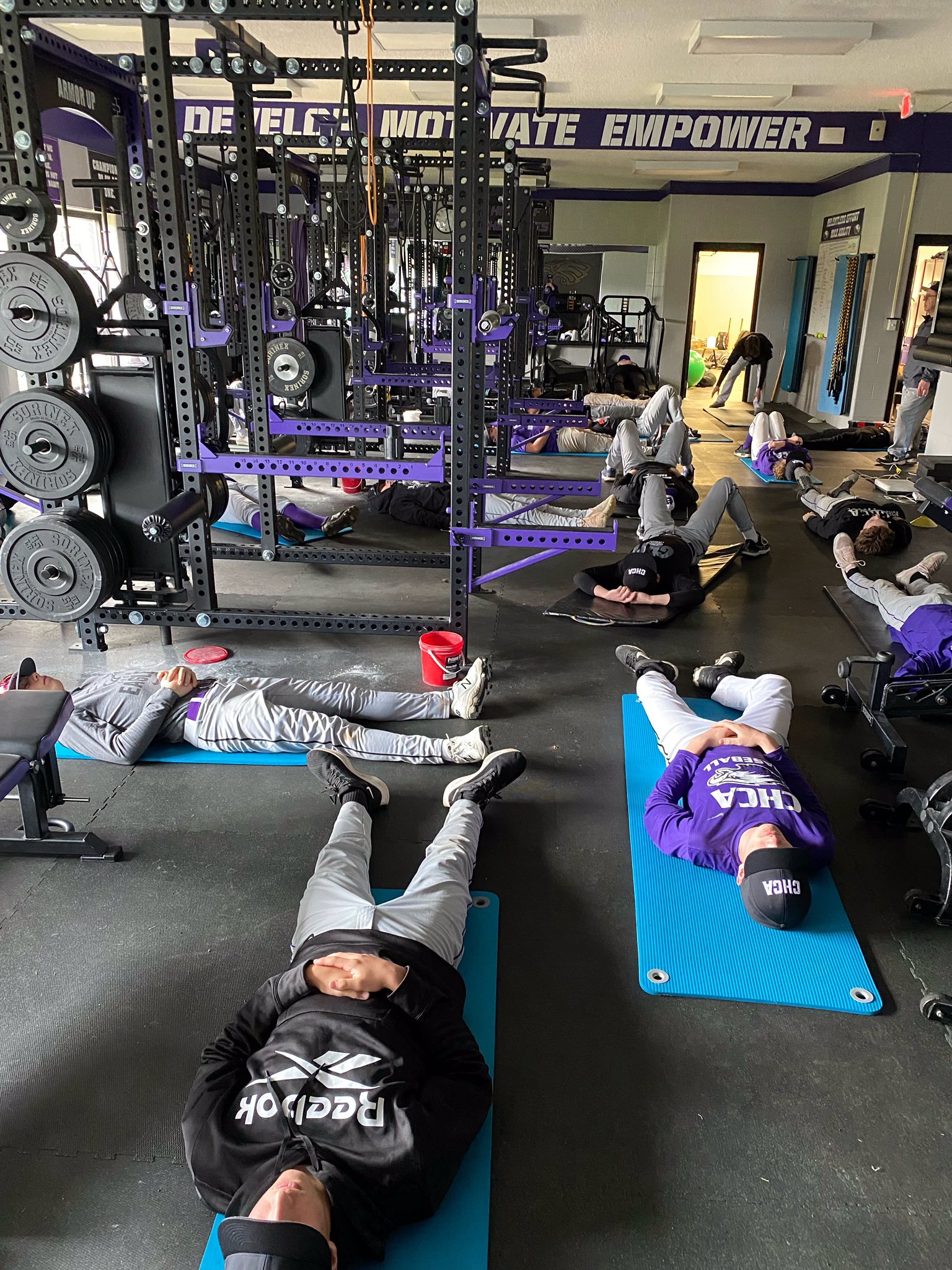
Baseball players meditate before practice
The Direct Tie To All 10 Pillars
Pillar 7, Routines and Habits of Excellence, turns goals into repeated action.
Pillar 1, Elite Mindset, treats setbacks as information for the next adjustment.
Pillar 2, Motivation and Commitment, connects the routine to purpose and carries it through low-feeling days.
Pillar 3, Focus and Awareness, protects the current action from distraction.
Pillar 4, Self-Control and Discipline, supports the choice to honor the calendar.
Pillar 5, Process Over Outcome, measures leading behaviors instead of chasing proof.
Pillar 6, Mental Imagery and Meditation, rehearses the goal and the daily execution required.
Pillar 8, Time Management and Organization, gives routines a real time and place.
Pillar 9, Leadership, builds self-leadership and trustworthy accountability.
Pillar 10, The Right Culture, makes consistent preparation a shared standard.
Common Mistakes
Mistake one is confusing visualization of the goal with execution of the plan.
Mistake two is building a routine with too many behaviors.
Mistake three is leaving the routine off the calendar.
Mistake four is measuring only outcomes.
Mistake five is treating a missed day as a broken identity.
Keep the vital few. Schedule them. Measure them. Restart.
A Seven-Day Routine Build
Day one: choose one meaningful goal and define why it matters.
Day two: reverse-engineer the weekly leading behaviors.
Day three: select the three daily actions with the highest return.
Day four: schedule each action and attach a visible prompt.
Day five: define the full and minimum versions.
Day six: create a success checklist and accountability check-in.
Day seven: review with Start, Stop, Continue and improve one point of friction.
Implementation Notes for Coaches
The fastest way to install a progress-producing daily routine is to translate the idea into behavior that a camera could capture.
For this topic, look for one most-important task, strong bookends, leading indicators, and an if-then plan for disruption.
Explain why those behaviors matter, demonstrate them, let the athlete personalize the language, and then evaluate the response in practice.
If the standard remains abstract, athletes will agree with it in a meeting and lose it when emotion, fatigue, uncertainty, or consequence enters the environment.
Use a simple progression: teach the response when the athlete is calm, rehearse it in a normal drill, and then pressure-test it.
One practical option is to have athletes build and run a seven-day routine that survives one intentionally disrupted day, then review the leading indicators rather than waiting for the final result.
Keep the feedback tied to the controllable behavior. Ask,
What did you do well?
What could you do better?
How will you make that improvement on the next rep?
That Well-Better-How review protects accountability while keeping the athlete connected to growth.
This is also where Pillar 7 — Routines and Habits of Excellence becomes part of the daily culture instead of a lesson athletes hear once.
Model the response as a coach, reinforce it when the outcome is good and when it is not, and measure improvement over time.
Do a little a lot. Repetition makes the response available when the athlete needs it most.
The Standard Going Forward
Goals create direction. Routines create evidence. Evidence creates self-trust.
Reverse-engineer the path.
Set the intention.
Schedule the action.
Measure the leading behavior.
Reflect and refocus.
Protect the MIT.
Build a minimum version.
Never miss the restart.
You cannot guarantee the final outcome. You can build a daily system that repeatedly earns progress toward it. That is how a goal becomes more than a wish
Your Next Step!
If you are a coach looking to master mental performance coaching, the missing link in your clients’ and athletes’ performance, join my MPM Coaches Insiders List and receive my best strategies for coaching mental performance and save $200 off my MPM Certification Course when it opens this fall.
💻 Join my MPM Coaches Certification Insiders List & Save $200
👍 Take my FREE 3 Day Coaches Mini-Course