How to Teach Control What You Can Control” So it Actually Sticks
“Control what you can control” may be the most common advice in sports. It is also some of the least useful advice when we do not teach athletes how to apply it.
An athlete hears the phrase after a bad call, a lineup decision, poor weather, a loss, or a social-media comment.
The coach says, “Control what you can control.” The athlete thinks, “I know—but how?” A principle sticks when it becomes a behavior.
Today I will show you how to turn this familiar phrase into a practical training system: identify the controllable, notice when attention leaves it, release the uncontrollable, and take the next best action.
This is central to Pillar 5, Process Over Outcome, and it connects to all 10 Pillars of Mental Performance Mastery.
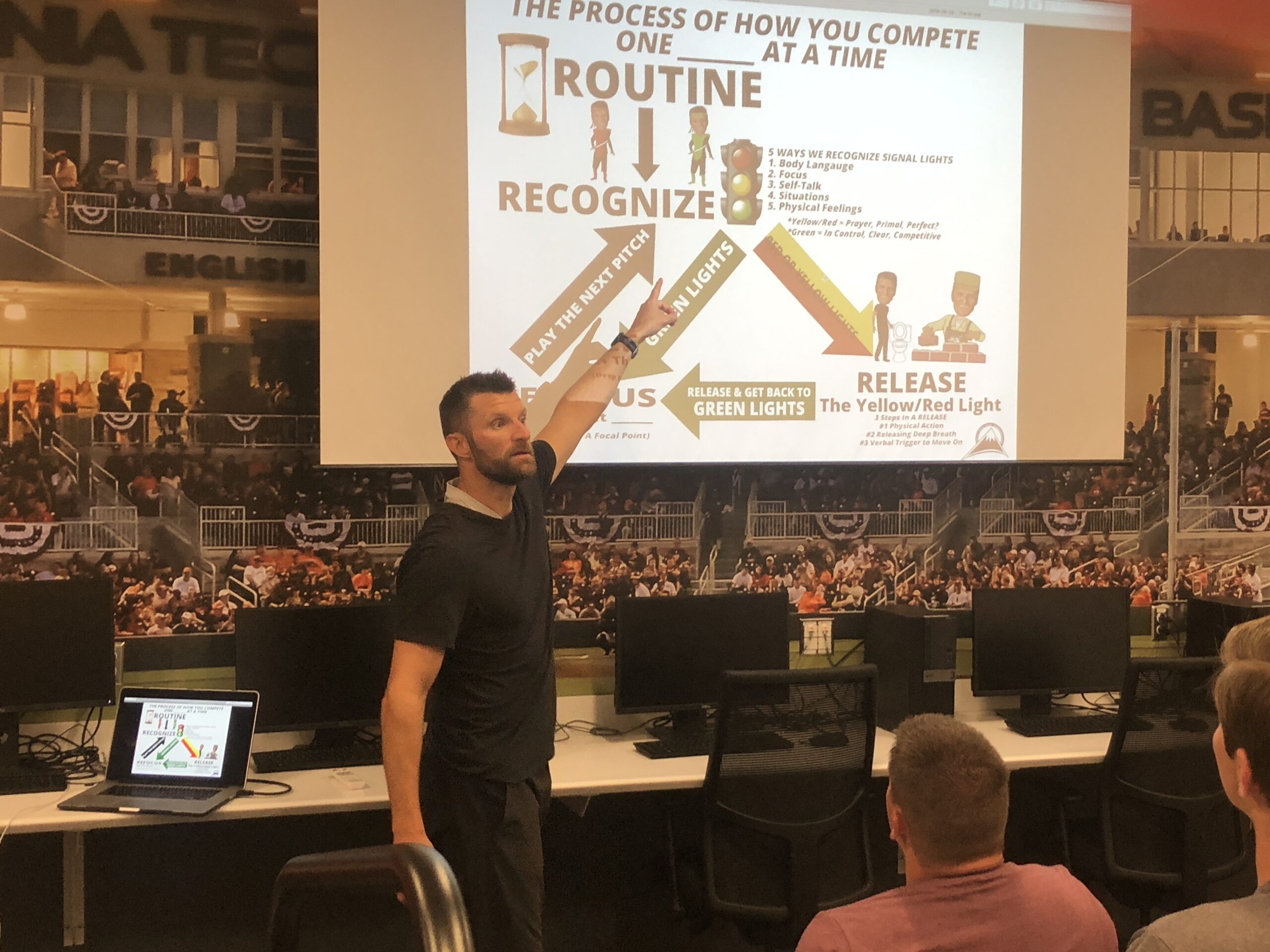
Teaching the process of Recognizing the signal, Releasing the weight, and Refocusing on the next controllable action
Control Is Not Certainty
First, clarify the word control. Athletes do not fully control outcomes. They influence outcomes through preparation, decisions, effort, communication, and execution.
A pitcher can make a quality pitch and give up a hit.
A basketball player can take the correct shot and miss.
A team can prepare well and face a better performance that day.
If we tell athletes they control the result, they may interpret every unwanted result as personal failure. A better framework has three categories.
- Things I control.
- Things I influence.
- Things I do not control.
I control my breath, body language, self-talk, preparation choices, effort, and response. I influence execution, relationships, team energy, and performance.
I do not control the official, crowd, opponent, weather, schedule, other people’s opinions, playing-time decisions, or final outcome. That distinction creates honesty without helplessness.
The Control Audit
Give athletes a blank sheet with three columns: Control, Influence, Release.
Choose a real situation. Maybe the athlete is not starting.
Control: Preparation today. Body language. Communication. Quality of the role. Questions asked in the meeting.
Influence: Future playing time. Coach trust. Team performance.
Release: Today’s lineup decision. A teammate’s performance. Other people’s opinions.
Now the phrase has content. Ask one more question: “What action in the control column has the highest return right now?”
The answer might be completing the role with energy, scheduling a direct conversation, or improving a specific skill. Control becomes movement.
Where Attention Goes
The athlete’s energy tends to follow attention. When attention stays on the official, the athlete gives the official another possession.
When attention stays on the weather, the athlete stops adapting.
When attention stays on statistics, the athlete leaves the next rep.
Teach a quick awareness check:
- “Where is my attention?”
- “Is that item control, influence, or release?”
- “What is my next controllable action?”
This can happen in seconds. The objective is not to never notice an uncontrollable. The objective is to spend less time and energy living there.
Use E+R=O
E plus R equals O gives the control principle a performance structure. The event may be an uncontrollable. The response contains controllables. The outcome is influenced by both.
A rain delay is the event. The athlete cannot control the weather. The response can include nutrition, movement, communication, and mental rehearsal.
A poor call is the event. The response can include one breath, connected body language, and the next assignment.
A lineup decision is the event. The response can include honest emotion, a scheduled conversation, and high-quality preparation.
Response-ability is the skill of moving attention from the event to the response.
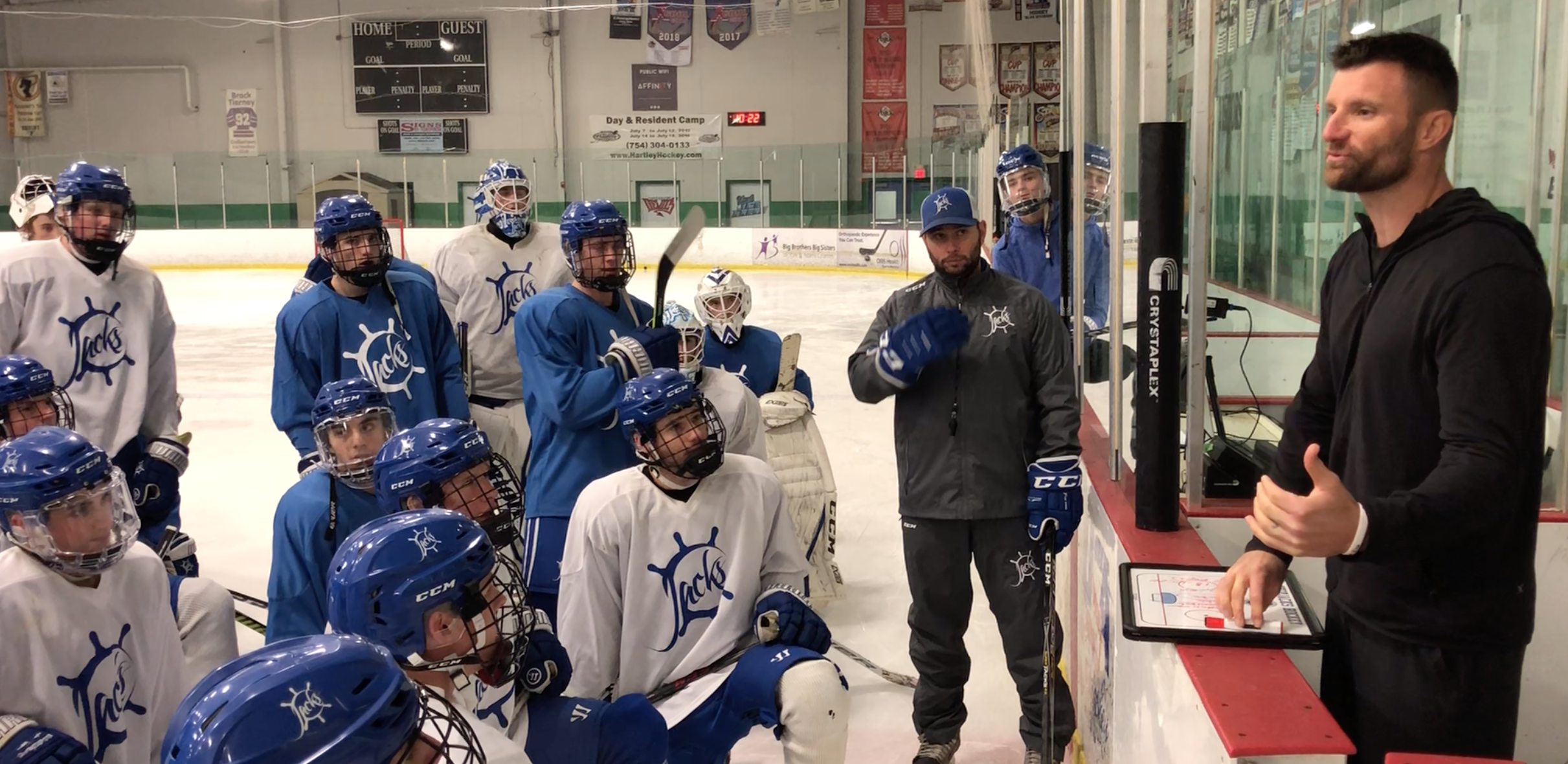
Preparing athletes for the moments that matter most.
Release Is An Action
Telling athletes to ignore uncontrollables is unrealistic. Give them a release behavior.
Recognize: “My focus is on the call.”
Release: turn away, exhale at a focal point, and use a cue such as “let it go” or “next.”
Refocus: identify the next assignment and move the body toward it. For larger off-field concerns, release may mean writing the issue down and scheduling when it can be addressed.
If the athlete is worried about a coach’s opinion, the next action may be a meeting tomorrow at 2:30. Scheduling is powerful because it tells the brain, “This is not being ignored. It has a place.”
Release does not mean apathy. It means refusing to spend current performance energy on an item that cannot be acted upon now.
Language That Makes It Stick
Listen for uncontrollable language.
- “They made me lose focus.”
- “The umpire ruined my game.”
- “I cannot play well in this weather.”
- “Coach destroyed my confidence.”
Do not respond with a lecture. Ask, “Which part of that is an event, and which part is your response?”
Then rebuild the sentence. “I lost focus after the call, and I can use my reset sooner.”
“The weather is difficult for everyone, and I can adjust my preparation.” “I am disappointed about the lineup, and I can choose how I prepare and communicate.”
Language moves the athlete from victimhood to ownership without pretending the event was fair. Ownership is not saying everything is your fault. Ownership is saying your response is your responsibility.
The APE Framework
A useful controllable framework is APE: attitude, preparation, and effort.
Attitude is the perspective and energy you bring.
Preparation is what you do before the moment.
Effort is how fully you engage the current action.
You can also expand the controllable list: Appearance and body language. Positive, productive self-talk. Present focus. Process. Performance choices. Perspective. Energy and emotions.
Athletes may not control the first emotion that appears, but they can influence the state through breath, body, focus, and language.
Use APE when the situation feels complicated. “What does the best version of attitude, preparation, and effort look like now?”
Train It In Practice
Create uncontrollable reps. Change the schedule unexpectedly. Make a questionable call. Create an uneven score. Change equipment or conditions safely.
Then ask athletes to name the category and execute the response.
The goal is not to frustrate people for entertainment.
The goal is to rehearse adaptability. Score the transition speed.
How quickly did the athlete move from the uncontrollable to the controllable? That is a valuable performance metric. At first it may take minutes. Then thirty seconds. Then one breath. Progress is a faster return.
A Coaching Example
Imagine a pitcher who believes the strike zone is inconsistent. The coach does not argue about whether the call was correct.
The coach asks: “Control, influence, or release?” The call is release.
Pitch quality and composure are influence. Breath, body language, target, and pitch commitment are control.
The pitcher turns from the plate, wipes the release point, exhales on the foul pole, says “through the glove,” and returns. The next pitch may still be called a ball.
Mental performance does not control the umpire. It stops the previous call from stealing the next pitch.
Coaches Must Model It
Coaches who obsess over officials while telling athletes to control the controllables destroy credibility.
Your behavior teaches the real standard. Build a coach reset. Use one designated communicator with officials.
Give staff members a cue when body language goes yellow. Review controllable coaching behaviors after the game.
You must be in control of yourself before you can control performance. The team will follow what you repeatedly demonstrate.
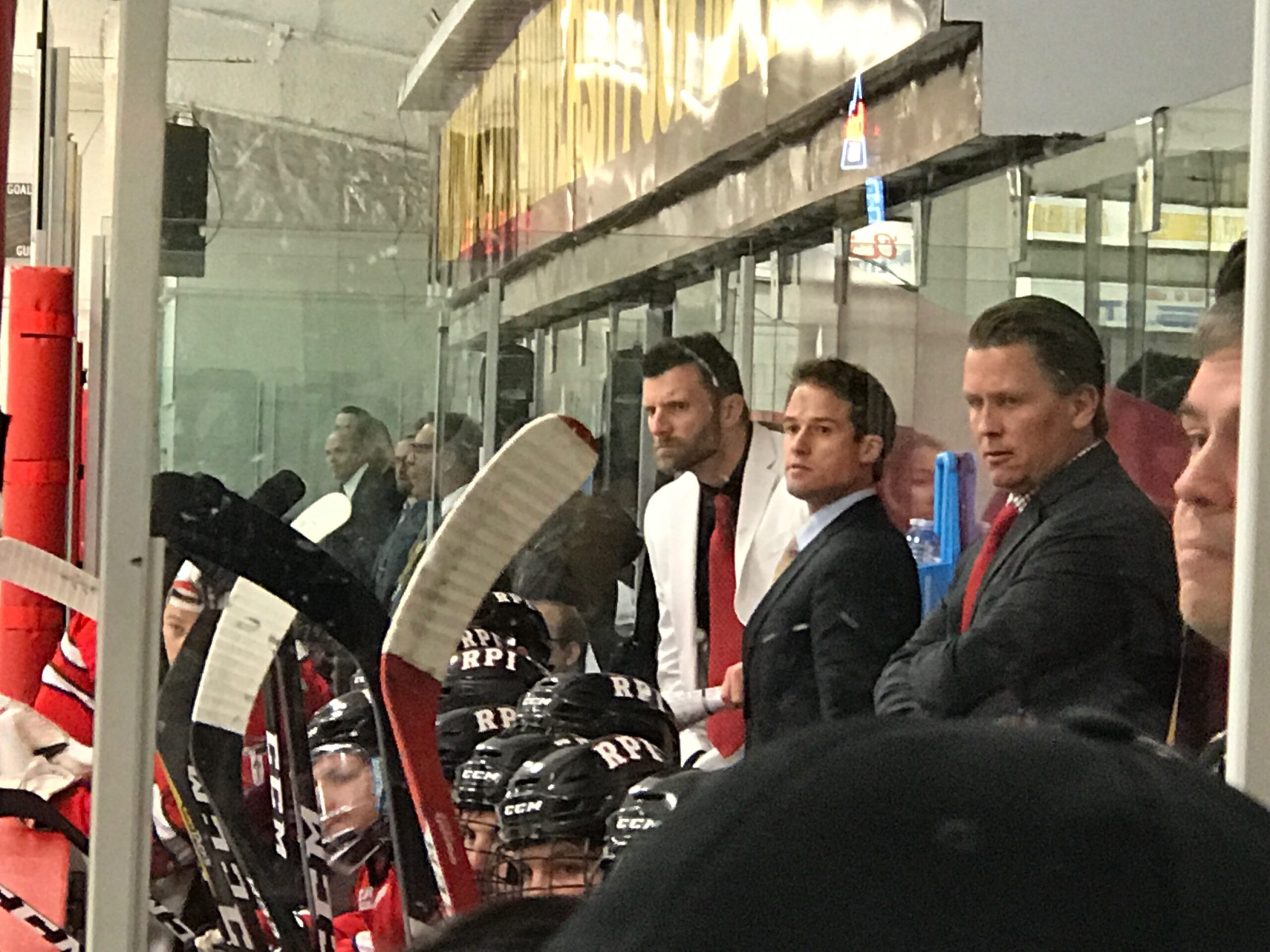
Coaching RPI players from the bench
The Direct Tie To All 10 Pillars
Pillar 5, Process Over Outcome, turns attention toward controllable execution.
Pillar 1, Elite Mindset, chooses ownership and useful perspective.
Pillar 2, Motivation and Commitment, reconnects the response to purpose.
Pillar 3, Focus and Awareness, notices where attention has gone.
Pillar 4, Self-Control and Discipline, creates the gap before reaction.
Pillar 6, Mental Imagery and Meditation, rehearses responding to uncontrollables.
Pillar 7, Routines and Habits of Excellence, makes the release and refocus repeatable.
Pillar 8, Time Management and Organization, schedules concerns that can be addressed later.
Pillar 9, Leadership, models ownership and direct communication.
Pillar 10, The Right Culture, removes BCD—blaming, complaining, and defensiveness—from the team’s normal language.
Common Mistakes
Mistake one is claiming athletes control outcomes.
Mistake two is using the phrase to dismiss legitimate emotion.
Mistake three is naming the uncontrollable without choosing an action.
Mistake four is expecting athletes to ignore unfairness.
Mistake five is coaching the principle while modeling the opposite.
Validate the event. Clarify the category. Execute the response.
A Seven-Day Control Plan
Day one: teach Control, Influence, Release.
Day two: complete a control audit on a real current challenge.
Day three: introduce the three awareness questions.
Day four: connect E+R=O and build a release routine.
Day five: teach APE—attitude, preparation, effort.
Day six: create an uncontrollable practice rep and score return speed.
Day seven: review where energy was spent and choose one response to repeat.
Implementation Notes for Coaches
The fastest way to install control of the controllables is to translate the idea into behavior that a camera could capture.
For this topic, look for a control audit, an E+R=O response, and a visible release action.
Explain why those behaviors matter, demonstrate them, let the athlete personalize the language, and then evaluate the response in practice.
If the standard remains abstract, athletes will agree with it in a meeting and lose it when emotion, fatigue, uncertainty, or consequence enters the environment.
Use a simple progression: teach the response when the athlete is calm, rehearse it in a normal drill, and then pressure-test it.
One practical option is to introduce random calls, weather changes, or opponent behavior and grade whether attention returns to a controllable action.
Keep the feedback tied to the controllable behavior. Ask,
What did you do well?
What could you do better?
How will you make that improvement on the next rep?
That Well-Better-How review protects accountability while keeping the athlete connected to growth.
This is also where Pillar 5 — Process Over Outcome becomes part of the daily culture instead of a lesson athletes hear once.
Model the response as a coach, reinforce it when the outcome is good and when it is not, and measure improvement over time.
Do a little a lot. Repetition makes the response available when the athlete needs it most.
The Standard Going Forward
“Control what you can control” sticks when athletes know what belongs in each category and what to do next.
Name control, influence, and release.
Notice where attention has gone.
Use E+R=O.
Release with a behavior.
Refocus on the highest-return action.
Control is not certainty. It is the disciplined choice to spend current energy where current action is possible.
That is how the phrase becomes a skill—and how the skill changes performance.
Your Next Step!
If you are a coach looking to master mental performance coaching, the missing link in your clients’ and athletes’ performance, join my MPM Coaches Insiders List and receive my best strategies for coaching mental performance and save $200 off my MPM Certification Course when it opens this fall.
💻 Join my MPM Coaches Certification Insiders List & Save $200
👍 Take my FREE 3 Day Coaches Mini-Course