How to Generate Buy-In From Your Athletes and Organization
You can have the best program in the world, but if athletes and leaders do not use it, the program does not exist in performance. Buy-in is not agreement in a meeting. It is not polite nodding.
It is behavior. Athletes use the routine. Coaches speak the language. Leaders model the standard. The organization protects time for the work.
Buy-in is built when people understand the purpose, trust the messenger, experience early evidence, and gain ownership in the process.
Today I will show you how to generate buy-in without manipulation through the four stages of adoption, the six Cs of leadership, small wins, shared language, and organizational alignment—all connected to the 10 Pillars of Mental Performance Mastery.
Buy-In Cannot Be Demanded
You can demand compliance. You cannot demand belief. Compliance says, “I will do this because the authority is watching.”
Buy-in says, “I see the value, I trust the process, and I am choosing to engage.”
External structure may be necessary at first. Team standards are not optional simply because an athlete is skeptical.
But if the entire system depends on control, it will weaken when the leader leaves.
The goal is to move people from borrowed commitment to owned commitment. That takes time, evidence, and relationship.
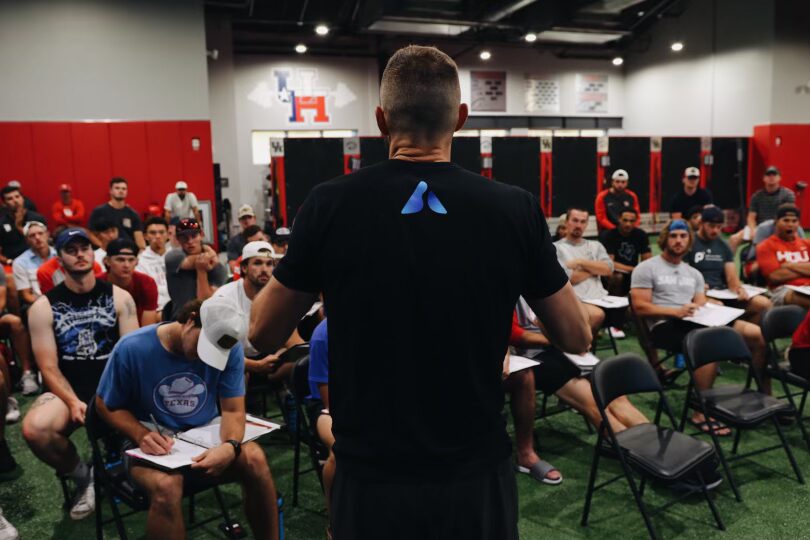
Brian running a MPM Seminar with Athletes
The Four Stages Of Buy-In
People often move through four stages.
Stage one: “It is not for me.” The person may be skeptical, afraid of looking weak, protective of an old identity, or unconvinced that the program fits their world.
Stage two: “It may be okay for others.” Resistance softens. The person sees a teammate benefit but has not taken personal risk.
Stage three: “I will try it.” This is the critical stage. The person is willing to experiment.
Stage four: “I cannot believe I did it any other way.” The tool has produced personal evidence and become part of identity.
Do not coach a stage-one athlete as if they are already at stage four. Your next objective may not be complete belief. It may be one honest experiment.
Start With The Problem They Care About
Leaders lose buy-in when they begin with the program instead of the person’s real problem. Do not start with, “Here is my mental-performance curriculum.” Ask:
- What keeps getting in your way?
- What happens under pressure?
- Where do you lose control of performance?
- What outcome matters to you?
If an athlete says, “I keep carrying the last pitch,” teach a between-pitch reset.
If a team says, “We collapse after bad calls,” teach E+R=O and a shared response.
If a leader says, “Our athletes do not prepare independently,” build a short success checklist and accountability system.
Solve a meaningful problem with a usable tool. Relevance opens the door.
A Story About Trust And Application
In my work with Georges St-Pierre, mental-performance coaching became useful because it was connected to a real competitive problem—not presented as abstract theory. After a difficult loss, fear and the past could have controlled the future.
We worked with tangible tools, including the mental-brick exercise, to separate the lesson from the emotional weight and bring attention back to the present process. The value came through application. The tool created a different relationship with the challenge.
That is a buy-in lesson for every coach. People rarely believe deeply because you describe a tool brilliantly.
They believe when the tool helps them handle something that matters. Make it relevant. Make it usable. Let experience produce evidence. [THE SIX Cs OF BUY-IN LEADERSHIP]
Pillar 9, Leadership, gives us six Cs.
Connection. Know the person before prescribing the tool. Ask, listen, and understand their language.
Character. Be honest about what the process can and cannot do. Do not promise guaranteed outcomes.
Competence. Know the method and connect it to performance accurately. Consistency. Use the language and standards beyond the launch meeting.
Communication. Explain the why, demonstrate the how, and make the first step clear.
Courage. Address resistance directly, invite questions, and hear feedback without becoming defensive.
Buy-in flows through trust, and trust is built through repeated evidence of the six Cs.
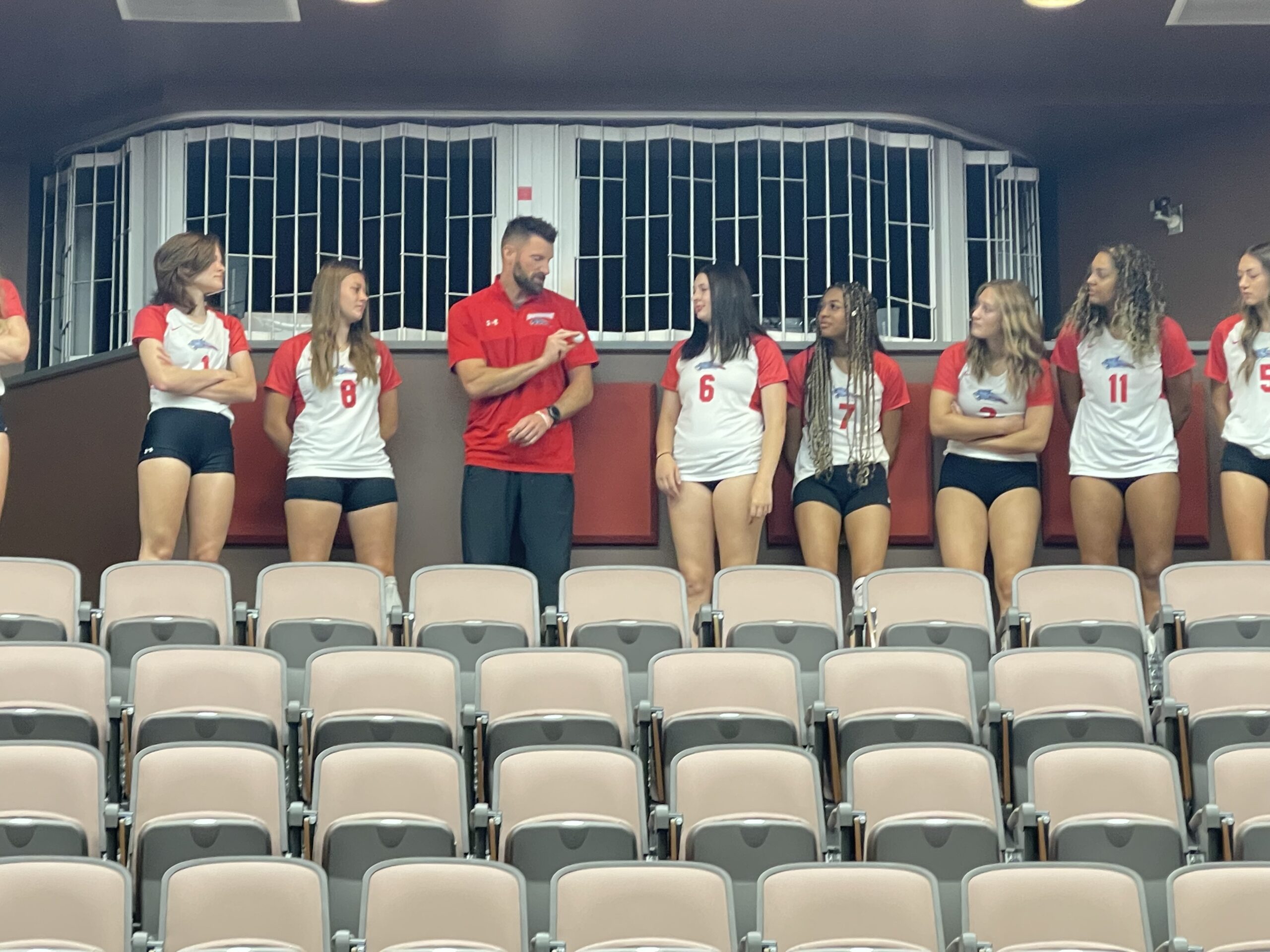
Brian Working with a Group of High School Athlete on Culture
Involve People In The How
Ownership increases when people participate in design. The leader may set the non-negotiable outcome. The group can help shape the behavior. For example:
The standard is that every athlete uses a reset after mistakes. Athletes personalize the physical release, focal point, and verbal cue.
The standard is punctual preparation. The team helps define what “ready” looks like.
The standard is a connected culture. Athletes define above-the-line and below-the-line behaviors.
This is bounded autonomy. It is not handing over leadership. It is giving people meaningful ownership inside clear standards. People support what they help create.
Create An Early Win
A large program can feel abstract and expensive.
Begin with one high-leverage behavior.
A one-breath reset.
A two-minute PM reflection.
A High Five Zone at entry.
A three-item success checklist.
An if-then plan for a common trigger.
Use it for one week. Measure evidence. Ask athletes what changed.
An early win does not need to be a dramatic outcome. Maybe the athlete returned attention faster. Maybe the coach used fewer reminders. Maybe a hard conversation became more direct. Maybe the team noticed less BCD.
Evidence moves people from “It may work” to “I have experienced it.”
Use Peer Proof Carefully
Athletes often trust teammates who understand their reality. Invite respected early adopters to explain how they use a tool. Not as a scripted endorsement. Ask for honest specifics.
- “What problem did it help?”
- “What was awkward at first?”
- “What did you change?”
- “What evidence did you notice?”
Peer teaching normalizes the skill and deepens learning. But do not shame skeptics by comparing them publicly. Curiosity grows better in psychological safety than in humiliation.
Align The Organization
Athlete buy-in dies when leaders send conflicting messages. The head coach says process over outcome while meetings focus only on statistics. The mental-performance coach teaches recovery while the schedule makes recovery impossible.
Captains use one reset language and assistants use five others. Align the system. Clarify:
- Why are we doing this?
- Which behaviors matter?
- What language will we share?
- Where will the skill be practiced?
- How will it be measured?
- Who reinforces it?
- What time and resources support it?
Organizational behavior tells athletes whether the initiative is real.
Handle Resistance As Information
Resistance is not always disrespect. It may reveal a bad past experience, a misunderstood purpose, a tool that does not fit, fear of vulnerability, or initiative fatigue. Ask:
- “What concern do you have?”
- “What would make this more useful?”
- “What evidence would you need?”
- “What is the smallest version you are willing to test?”
Listen without surrendering every standard. Some resistance contains useful feedback. Some requires courageous accountability. Leadership is knowing the difference.
Make The Work Part Of Practice
Buy-in falls when mental performance is an extra lecture disconnected from sport. Integrate it.
Teach the reset, then use it in the drill. Define the process, then score it.
Teach pressure breathing, then require it before the next rep. Introduce culture behaviors, then recognize evidence after practice.
Application answers the question athletes are always asking: “How does this help me perform?”
The Direct Tie To All 10 Pillars
Pillar 9, Leadership, creates trust, communication, and ownership.
Pillar 1, Elite Mindset, keeps leaders curious rather than defensive about resistance.
Pillar 2, Motivation and Commitment, connects tools to personal and team purpose.
Pillar 3, Focus and Awareness, helps people notice whether behavior matches stated priorities.
Pillar 4, Self-Control and Discipline, turns initial agreement into repeated action.
Pillar 5, Process Over Outcome, defines early wins through controllable evidence.
Pillar 6, Mental Imagery and Meditation, gives athletes an experiential tool they can feel and apply.
Pillar 7, Routines and Habits of Excellence, moves buy-in from words to behavior.
Pillar 8, Time Management and Organization, protects time and removes friction.
Pillar 10, The Right Culture, reinforces the system through shared language and visible standards.
Common Mistakes
Mistake one is launching too much at once.
Mistake two is demanding belief before experience.
Mistake three is dismissing skepticism as bad attitude.
Mistake four is offering choice where the standard must be clear—or no choice where personalization would help.
Mistake five is failing to align leaders and schedules.
Start small. Solve a real problem. Build evidence. Expand from trust.
A Seven-Day Buy-In Plan
Day one: identify the real performance problem your people care about.
Day two: listen to concerns and determine the current stage of buy-in.
Day three: choose one simple tool and explain the why.
Day four: let athletes personalize the how inside the standard.
Day five: integrate the tool into practice and measure one behavior.
Day six: invite honest peer evidence and organizational feedback.
Day seven: review what helped, remove friction, and decide the next small expansion.
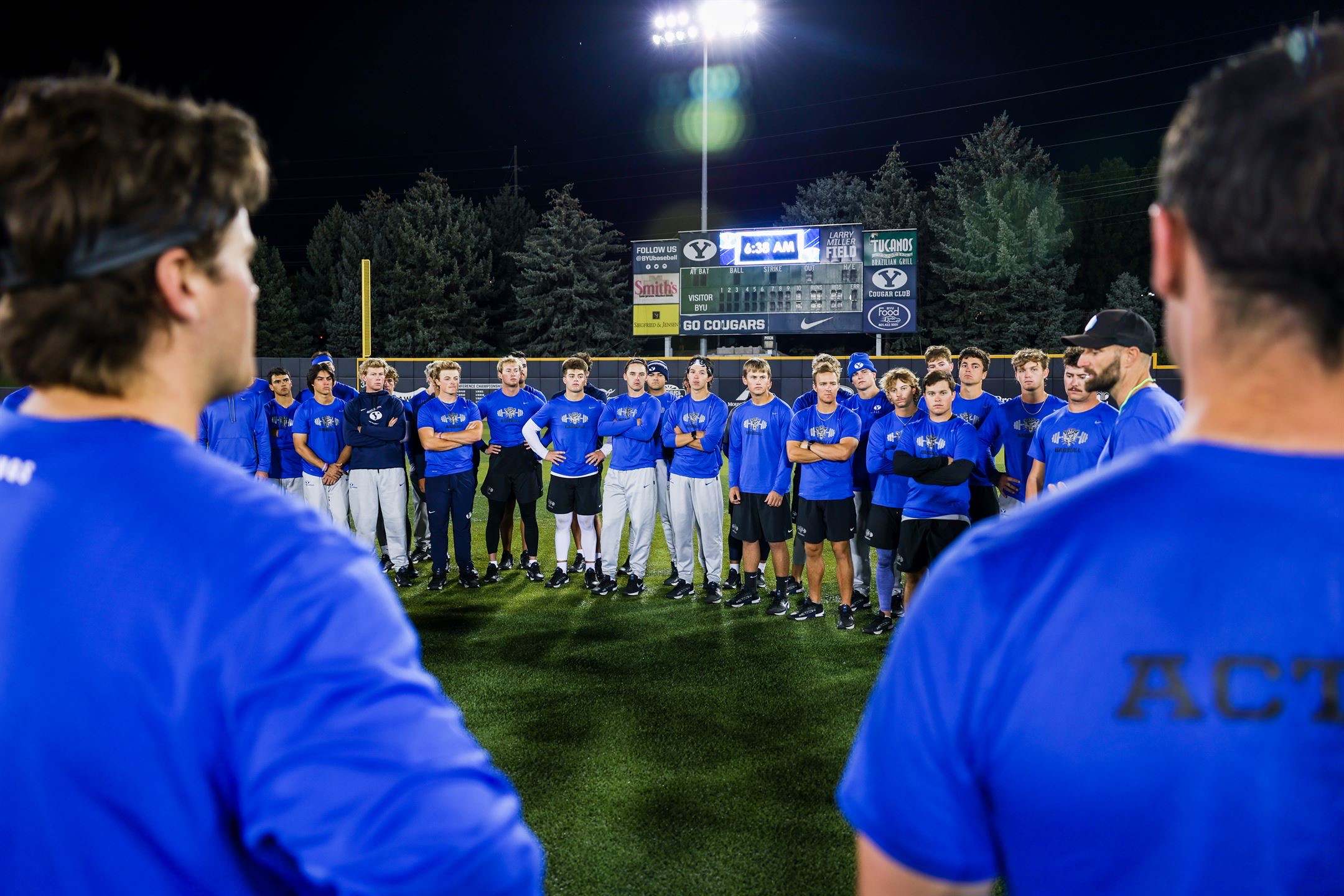
Brian Taking BYU Baseball through on Field Culture Work
Implementation Notes for Coaches
The fastest way to install real buy-in is to translate the idea into behavior that a camera could capture.
For this topic, look for a problem people care about, shared input on the how, an early win, and consistent organizational alignment. Explain why those behaviors matter, demonstrate them, let the athlete personalize the language, and then evaluate the response in practice.
If the standard remains abstract, athletes will agree with it in a meeting and lose it when emotion, fatigue, uncertainty, or consequence enters the environment.
Use a simple progression: teach the response when the athlete is calm, rehearse it in a normal drill, and then pressure-test it.
One practical option is to run a short listening-and-design session, choose one behavior the group helped shape, and create an early practice win that proves the value.
Keep the feedback tied to the controllable behavior. Ask,
- “What did you do well?”
- “What could you do better?”
- “How will you make that improvement on the next rep?”
That Well-Better-How review protects accountability while keeping the athlete connected to growth.
This is also where Pillar 9 — Leadership becomes part of the daily culture instead of a lesson athletes hear once. Model the response as a coach, reinforce it when the outcome is good and when it is not, and measure improvement over time.
Do a little a lot. Repetition makes the response available when the athlete needs it most.
The Standard Going Forward
Buy-in is not something you force. It is something you earn and build.
Connect to a real problem. Lead with character and competence. Make the first step small. Give ownership inside the standard. Create an early win. Use evidence. Align the organization.
Move people from “It is not for me” to “I will try it,” and let useful experience carry them toward “I cannot believe I did it any other way.”
That is how a program becomes behavior—and how behavior becomes culture.
Your Next Step!
If you are a coach looking to master mental performance coaching, the missing link in your clients’ and athletes’ performance, join my MPM Coaches Insiders List and receive my best strategies for coaching mental performance and save $200 off my MPM Certification Course when it opens this fall.
💻 Join my MPM Coaches Certification Insiders List & Save $200
👍 Take my FREE 3 Day Coaches Mini-Course