How to Build Unshakable Confidence
Athletes often talk about confidence like the weather.
“I have it today.” “I lost it.” “I hope it comes back before the game.”
If confidence is something that randomly arrives and disappears, the athlete becomes powerless.
Here is the shift: You do not get confidence. You do confidence. Confidence is not the promise that everything will go well. It is trust that you can prepare, act, adjust, and respond no matter what happens.
That kind of confidence can be trained. It becomes more unshakable because it is built on controllable evidence rather than a fragile string of good results.
Today I will show you how to build it through preparation, body language, focus, self-talk, imagery, courage, and response—all connected to the 10 Pillars of Mental Performance Mastery.
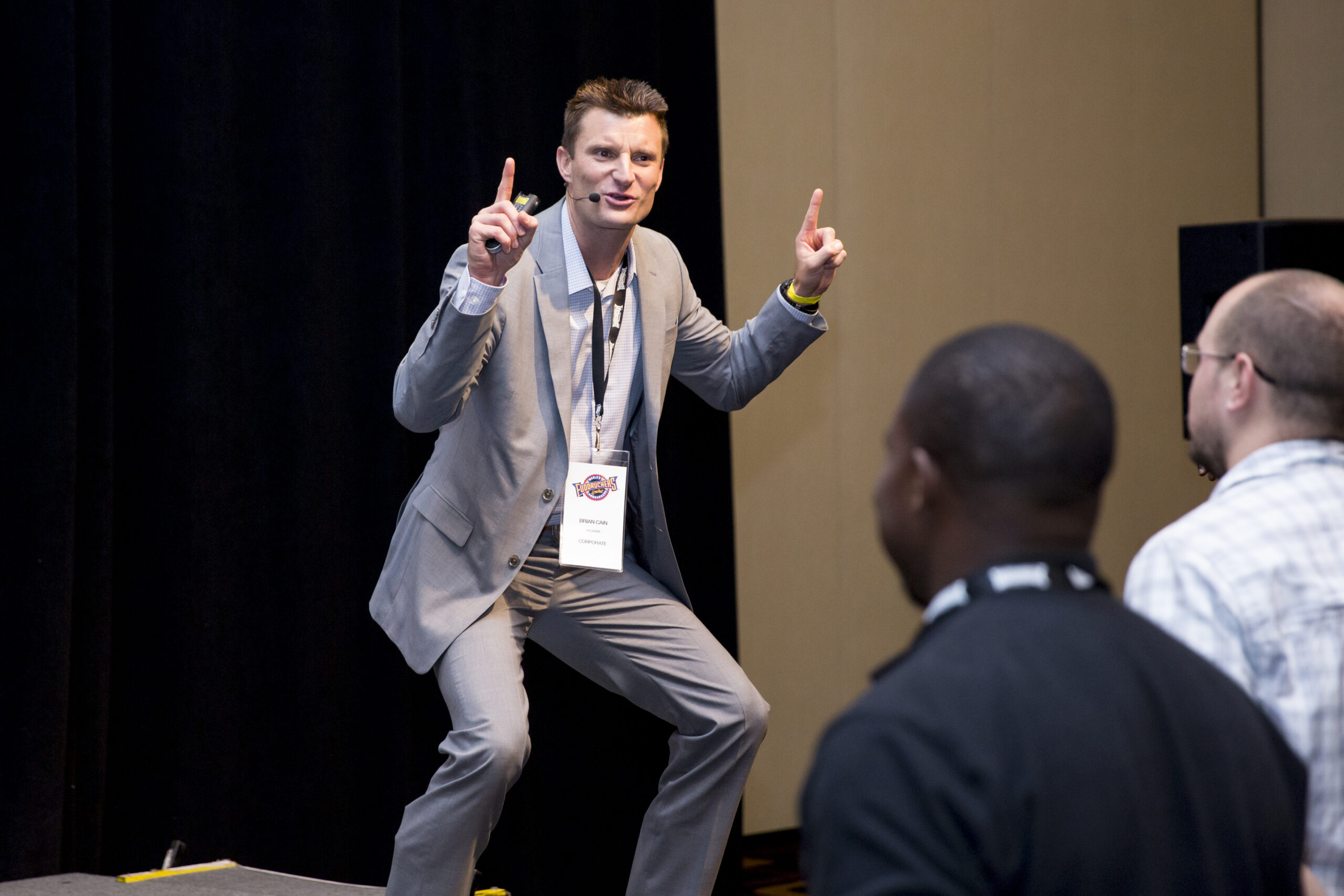
Brian leading a seminar for Fuddruckers’s in Houston TX
Confidence Is Not A Feeling Requirement
Athletes think confident performance must begin with a confident feeling. But feelings change.
An athlete can feel nervous and still be ready.
An athlete can feel doubt and still commit.
An athlete can feel disappointed and still lead.
Feelings are real, but feelings are not always facts. The athlete may feel unprepared while the evidence shows months of preparation. The athlete may feel certain after one good rep while the process is still incomplete.
We do not ignore feeling. We refuse to make it the only source of truth. Ask:
- “What does the evidence say?”
- “What would confident behavior look like right now?”
Then act. The feeling often follows behavior.
Use The BFS Check
BFS stands for Body Language, Focus, and Self-talk. These are three ways athletes do confidence.
Body language: Posture tall. Eyes connected. Movement purposeful. Breathing deliberate. Body language is not fake. It is a signal to the nervous system, teammates, and opponent.
Focus: Attention on the target, routine, and current task. Low confidence stares at consequences and past mistakes. Confident behavior returns to the next controllable action.
Self-talk: Useful, believable, and actionable language.
“See it early.” “Trust the read.” “Strong and smooth.” “Next best decision.”
Do not demand a dramatic statement the athlete does not believe. Choose language that directs execution.
When confidence shakes, check BFS before debating the emotion.
Preparation Creates Trust
Confidence grows when athletes can point to completed preparation. A success checklist creates evidence.
- Did I complete the training plan?
- Did I rehearse the situation?
- Did I recover?
- Did I study the opponent?
- Did I use my routine under pressure?
Preparation does not guarantee the result. It reduces the number of unanswered questions. The night before competition is not the time to invent confidence.
It is the time to remember the work. Build routines that produce proof across weeks and months.
Then use a pre-performance review: “I have done the work available to me. Now my job is to compete freely.”
Build A Confidence Resume
The mind has a negativity bias. One recent failure can feel larger than ten previous successes.
Build a confidence resume. Include:
- Performances you are proud of
- Hard practices completed
- Adversity overcome
- Skills improved
- Feedback earned
- Moments you responded well after a mistake
- Promises you kept
The resume is not ego decoration. It is a balanced evidence file. Read it before important performances or when a slump creates an inaccurate story.
Then select one memory and turn it into a final TIF: thought, image, or feeling. See the confident body language.
Hear the useful cue. Feel the rhythm of committed execution. Bring the evidence into the present.
Courage Comes Before Confidence
Confidence does not always arrive before action. Often courage goes first.
The athlete takes the shot while uncertain. Speaks in the team meeting while nervous.
Returns after injury without perfect assurance. Asks the difficult question. Attempts the new skill. The action creates evidence. Evidence builds confidence.
If coaches protect athletes from every uncomfortable rep, they remove opportunities to earn self-trust. Scale the challenge, but let athletes act.
Courage says, “I can move with uncertainty.” That is a deeper foundation than, “I only act when I feel sure.”
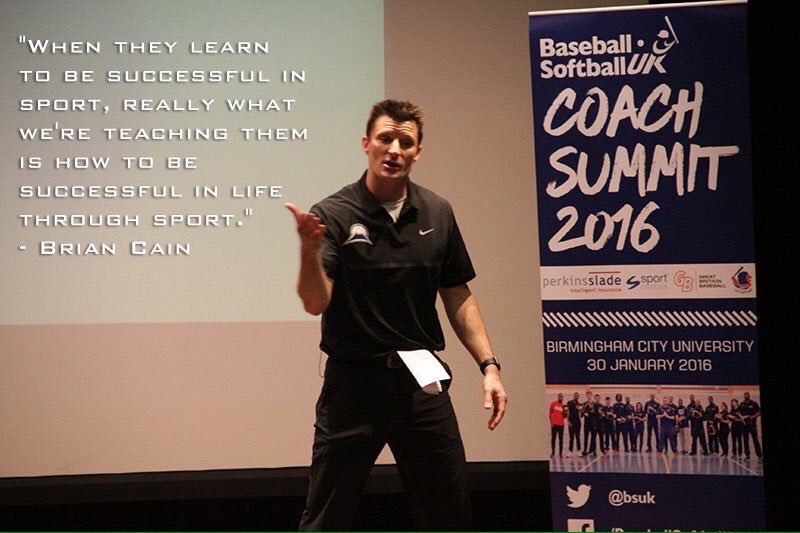
Speaking at a Baseball Softball Summit in The UK
Separate Self-Worth From Results
Performance matters, but performance is not personhood. When an athlete’s worth rises and falls with statistics, confidence becomes impossible to stabilize.
A bad game becomes, “I am bad.” A bench decision becomes, “I do not matter.” Coaches must correct behavior and maintain human connection.
“That performance was below the standard. It does not change your value. Let us study the response.” This does not lower accountability. It makes accountability safer and more honest.
Athletes can face the truth without defending their identity.
Make Confidence Specific
“I need more confidence” is too broad. Ask, “Confidence to do what?”
- Confidence in a free-throw routine?
- Confidence communicating the defense?
- Confidence attacking the first pitch?
- Confidence returning after a mistake?
Specific confidence creates specific practice. If the athlete lacks confidence in a tactical read, study and rehearse the read.
If the athlete lacks confidence in physical preparation, complete the plan and recovery.
If the athlete lacks confidence after mistakes, train Recognize–Release–Refocus.
If the athlete lacks confidence under observation, progressively add an audience. Diagnose the skill, not just the feeling.
Train Confidence Under Pressure
Confidence must survive difficulty. Start with successful execution at low intensity. Then add speed. Add fatigue. Add score. Add observation. Add consequence.
Require the athlete to use BFS and the performance routine.
After each rep, debrief:
- Was body language intentional?
- Was focus on the task?
- Was self-talk useful?
- Did the athlete commit?
A successful mental rep does not require a perfect result. A missed shot with committed behavior can still build trust. A made shot with hesitation may hide a fragile process.
Responding Restores Confidence
Unshakable confidence does not mean never being shaken. It means knowing how to return. Use E+R=O.
The unwanted event happens. The athlete chooses the response. Use Recognize, Release, Refocus.
Recognize the yellow signal.
Release with a physical action, breath, focal point, and cue.
Refocus on the next thought, image, or feeling.
Confidence is protected by the athlete’s trust in the response—not by the fantasy that mistakes will disappear. “I may not control the next result. I know how I will respond.” That is durable confidence.
A Composite Example
Imagine a volleyball player who has been blocked several times and begins tipping every ball. She says she lost confidence. The coach makes confidence specific: aggressive decision and full arm swing on the correct set.
They review preparation evidence and one video clip from her confidence resume.
Her BFS cue is tall posture, eyes on the block, and “high hands.” Practice begins with predictable sets, then adds live blockers, score, and consequence.
They grade commitment separately from whether the ball lands. She does not wait to feel fearless. She acts courageously, collects evidence, and rebuilds trust.
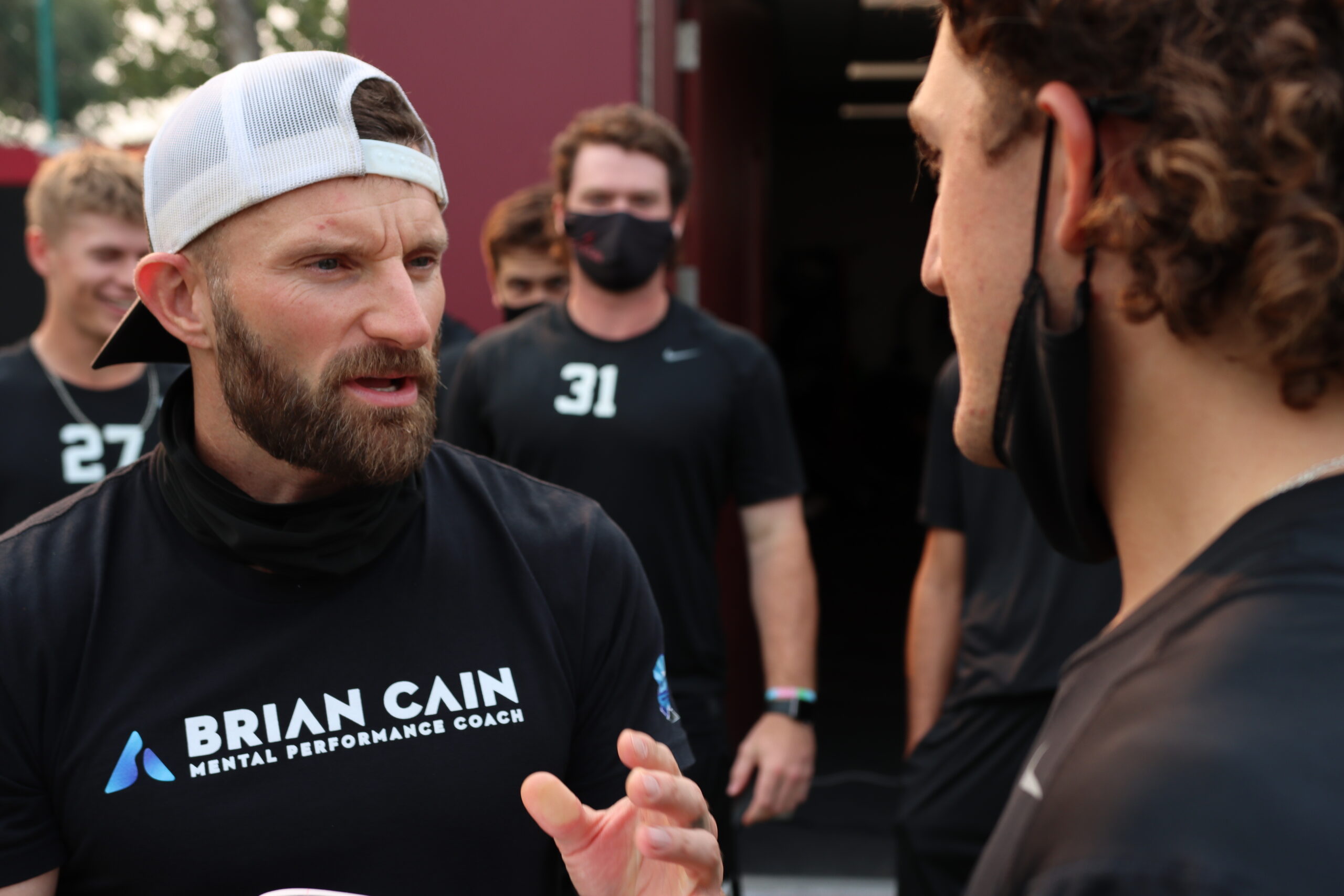
Brian Cain coaches a Santa Clara athlete
The Direct Tie To All 10 Pillars
Pillar 1, Elite Mindset, anchors confidence in perspective and response.
Pillar 2, Motivation and Commitment, keeps preparation moving when feelings dip.
Pillar 3, Focus and Awareness, detects doubt and returns attention to the task.
Pillar 4, Self-Control and Discipline, chooses confident behavior under stress.
Pillar 5, Process Over Outcome, prevents one result from becoming a verdict.
Pillar 6, Mental Imagery and Meditation, rehearses successful, adaptable execution.
Pillar 7, Routines and Habits of Excellence, creates repeatable evidence.
Pillar 8, Time Management and Organization, protects the preparation behind trust.
Pillar 9, Leadership, expresses confidence through connection, communication, and courage.
Pillar 10, The Right Culture, separates human value from results while holding high standards.
Common Mistakes
Mistake one is telling athletes to “just be confident.”
Mistake two is building confidence only through easy success.
Mistake three is using false praise that conflicts with evidence.
Mistake four is making confidence depend on the last result.
Mistake five is overcorrecting mechanics during performance and pulling attention inward.
Coach behavior. Build evidence. Add challenge. Trust the response.
A Seven-Day Confidence Plan
Day one: make confidence specific.
Day two: assess Body Language, Focus, and Self-talk.
Day three: build a confidence resume.
Day four: define a success checklist for preparation.
Day five: rehearse a confident TIF with imagery.
Day six: add progressive pressure and score commitment.
Day seven: review evidence and define the response after the next mistake.
Implementation Notes for Coaches
The fastest way to install earned confidence is to translate the idea into behavior that a camera could capture.
For this topic, look for preparation evidence, courageous action, specific self-talk, and a confidence resume.
Explain why those behaviors matter, demonstrate them, let the athlete personalize the language, and then evaluate the response in practice.
If the standard remains abstract, athletes will agree with it in a meeting and lose it when emotion, fatigue, uncertainty, or consequence enters the environment.
Use a simple progression: teach the response when the athlete is calm, rehearse it in a normal drill, and then pressure-test it.
One practical option is to select one difficult rep the athlete might avoid, prepare for it, execute it with courage, and record the evidence regardless of outcome.
Keep the feedback tied to the controllable behavior. Ask,
- What did you do well?
- What could you do better?
- How will you make that improvement on the next rep?
That Well-Better-How review protects accountability while keeping the athlete connected to growth.
This is also where Pillar 1 — Elite Mindset becomes part of the daily culture instead of a lesson athletes hear once.
Model the response as a coach, reinforce it when the outcome is good and when it is not, and measure improvement over time.
Do a little a lot. Repetition makes the response available when the athlete needs it most.
The Standard Going Forward
Unshakable confidence is not permanent certainty. It is trained trust. Trust in preparation. Trust in the next action. Trust in the ability to adjust. Trust in the response after failure.
You do not get confidence. You do confidence. Check the body. Direct the focus. Choose useful self-talk. Act with courage.
Collect the evidence. Then, when confidence gets shaken, use the routine and return. That is confidence built to last.
Your Next Step!
If you are a coach looking to master mental performance coaching, the missing link in your clients’ and athletes’ performance, join my MPM Coaches Insiders List and receive my best strategies for coaching mental performance and save $200 off my MPM Certification Course when it opens this fall.
💻 Join my MPM Coaches Certification Insiders List & Save $200
👍 Take my FREE 3 Day Coaches Mini-Course