Coaches often talk about discipline as if athletes either have it or they do not.
“That kid is disciplined.” “That kid has no self-control.”
But self-control and discipline are not fixed personality traits. They are trainable skills. Self-control is the ability to create space between impulse and action.
Discipline is the practice of choosing the behavior aligned with your standard—even when a different choice feels easier in the moment.
That means discipline is not punishment. It is not yelling. It is not suffering for the sake of suffering. Discipline is keeping useful promises to yourself and your team.
Today I will show you how to coach it through awareness, standards, environment, replacement behaviors, progressive reps, and accountability—all tied to the 10 Pillars of Mental Performance Mastery.
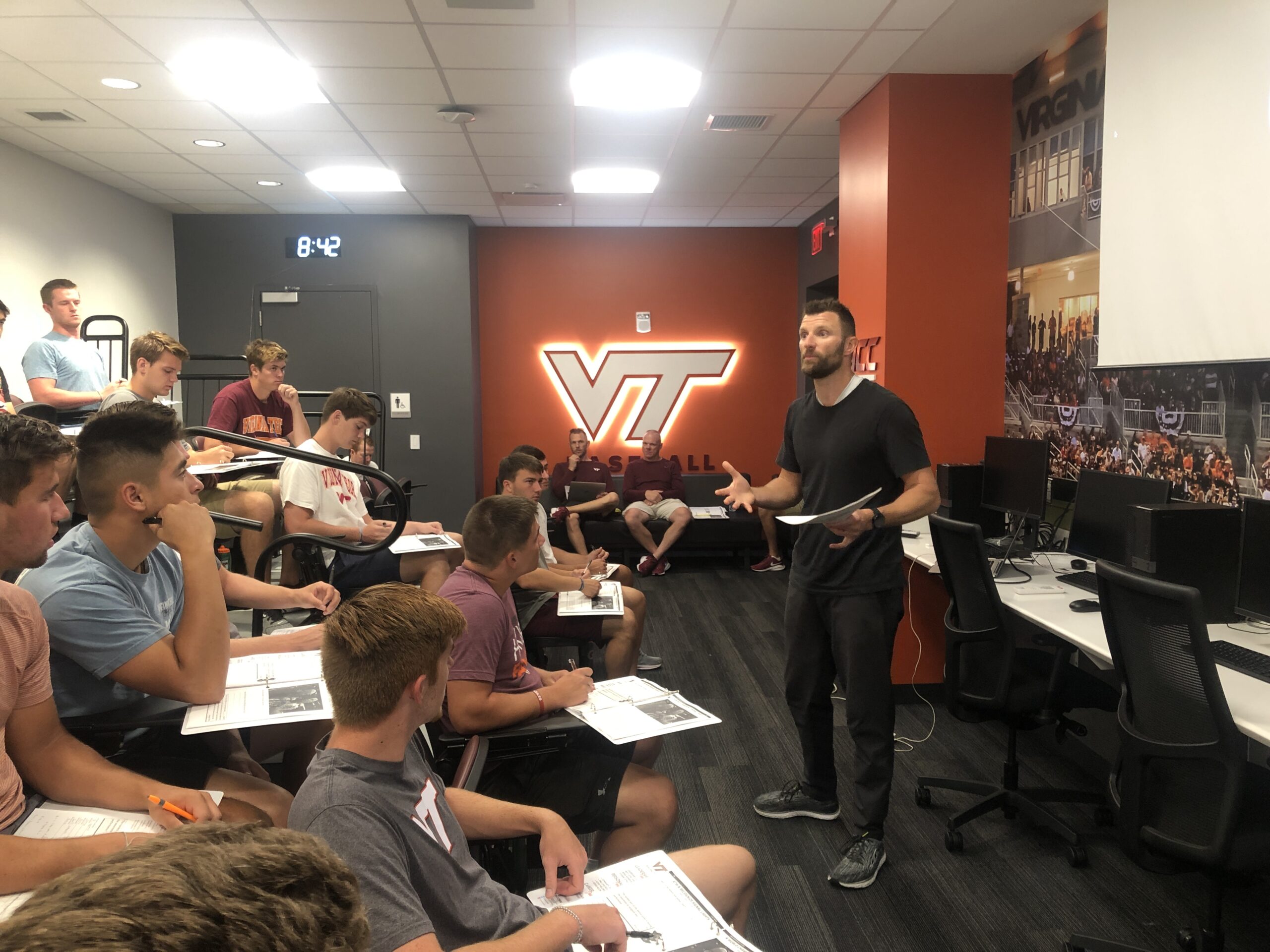
Leading a Virginia Tech team session
Why Willpower Is Not Enough
Willpower matters, but it is a limited resource. It becomes less reliable when athletes are tired, hungry, stressed, rushed, or emotionally activated.
If your discipline system depends on making the hardest possible decision every time, it will eventually break. Train the athlete and design the environment.
An athlete who wants better sleep should not depend on resisting a phone placed next to the pillow every night.
Move the phone. Set a charging station. Create a shutdown alarm. Attach the PM routine to an existing behavior.
That is not weakness. It is intelligent preparation. Elite performers do not prove discipline by creating unnecessary temptation. They use structure to protect important choices.
Define The Standard
Discipline is impossible to coach when the standard is vague. “Be more disciplined” does not tell an athlete what to do.
Define behavior. Arrive ten minutes before the start time with equipment ready. Complete the warmup in the listed order. Use the reset routine after every mistake. Place the phone outside the bedroom at 9:30.
Begin recovery within fifteen minutes after practice. A standard should be visible and measurable.
Then explain why it matters. Punctuality protects team preparation. Recovery protects tomorrow’s performance.
The reset routine protects the next play. Purpose gives the standard meaning. Clarity gives it action.
Recognize The Impulse
Self-control begins with awareness. Athletes must learn what happens before the unwanted behavior.
Use the habit loop: Cue. Craving or impulse. Response. Reward.
A player receives difficult feedback. The cue is correction in front of teammates. The impulse is to defend or withdraw. The response is eye rolling or argument. The short-term reward is protecting ego.
The long-term cost is lost learning and trust. Slow the loop down.
- What did the athlete feel in the body?
- What thought appeared?
- What reward was the reaction seeking?
Awareness gives us a place to intervene.
Replace The Habit
Do not only tell athletes what to stop. Give them a replacement.
If the old response to feedback is defensiveness, the replacement might be: Exhale. Say, “Got it.”
Repeat the correction. Ask one useful question after the rep.
If the old response to a mistake is dropping body language, the replacement is Recognize–Release–Refocus.
If the old response to stress is endless phone scrolling, the replacement might be three breaths, write the next action, place the phone away, and begin the minimum version of the task.
The brain needs somewhere to go. You rarely remove a habit by creating an empty space. Replace it with a response that satisfies the real need in a better way.
Use B=MAP
Behavior happens when Motivation, Ability, and a Prompt come together.
Motivation asks, “Why does this matter?”
Ability asks, “Can the athlete execute this under current conditions?”
Prompt asks, “What triggers the action at the right moment?”
If recovery is inconsistent, reconnect the behavior to the athlete’s goal, make the routine shorter and clearer, and place the prompt at the end of practice.
If journaling disappears, reduce it to three questions and attach it to the evening shutdown. If the athlete does not use a reset routine, practice it at low intensity and add a visible cue.
Discipline grows when good behavior becomes easier to start and easier to remember. [TRAIN DELAY, NOT DENIAL] Self-control does not always mean saying no forever.
Often it means delaying an impulse long enough to make an intentional choice.
“I can check the message after the study block.”
“I can address the call with the official after the play.”
“I can review the mistake after competition.”
“I can have the hard conversation when my body is back in green.”
Use a ten-second pause, one breath, or a written parking lot for later items. Delay creates distance. Distance gives the standard a voice.
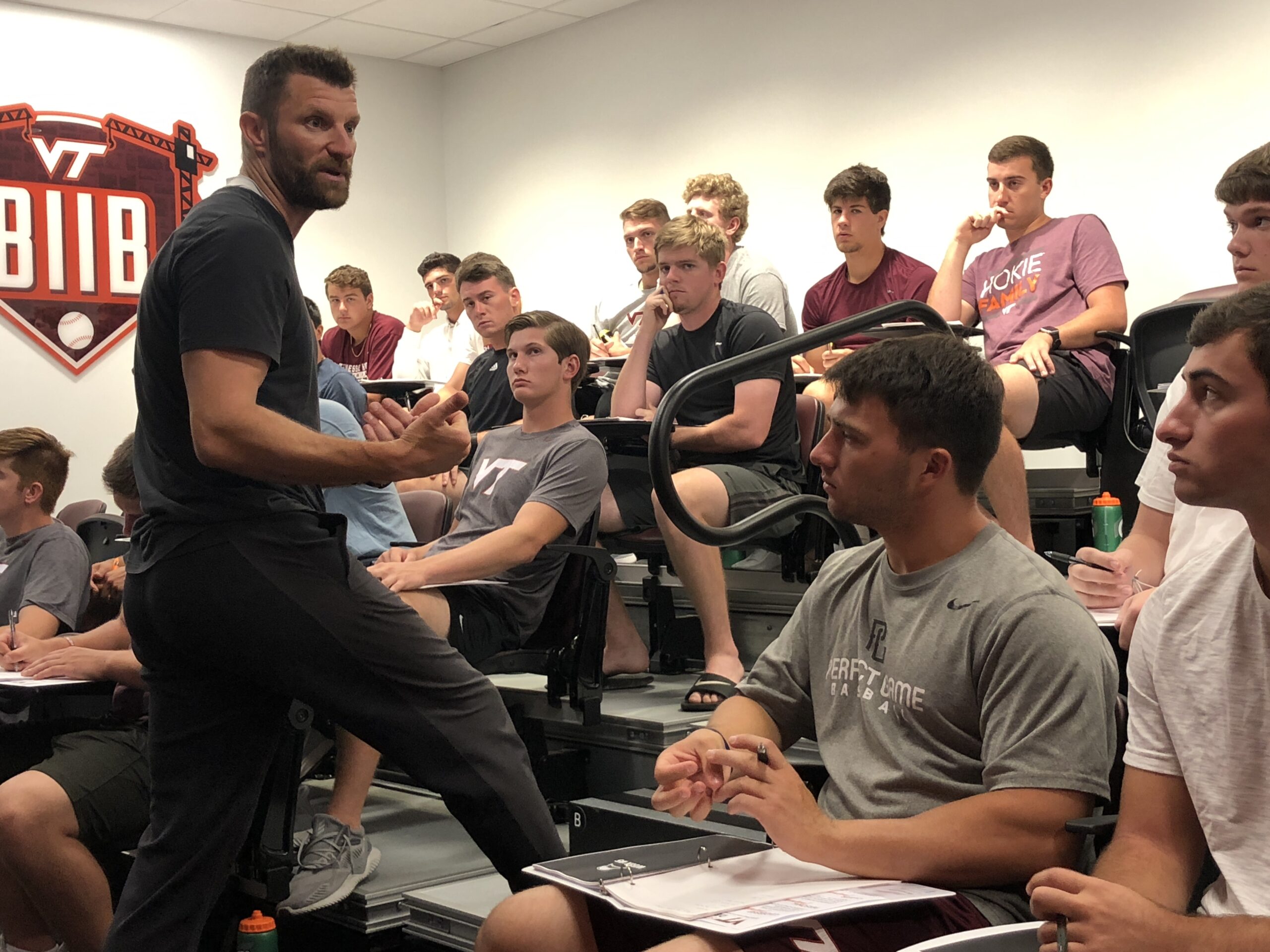
Talking with seated Virginia Tech athletes
Build Discipline Progressively
Do not begin with the hardest possible test. Train small promises. One week of arriving prepared. Five days of completing the PM routine. Ten practice reps using the reset. One study block with the phone away.
Completion creates evidence. Evidence creates self-trust. Then increase difficulty. Add travel. Add fatigue. Add social pressure. Add competition consequence.
The goal is not a perfect streak. The goal is a reliable restart.
When an athlete misses, ask: What was the cue? Where did the system break? What is the next best response? Never miss the restart.
The Difference Between Discipline And Control
Coaches can confuse disciplined athletes with compliant athletes.
Compliance is doing what the authority says while the authority is present.
Discipline is choosing the standard because the athlete understands, owns, and can execute it.
External structure is appropriate, especially early. But the long-term goal is internal leadership.
Explain the standard. Invite bounded ownership. Teach the skill. Transfer responsibility. An athlete who needs constant policing has not yet developed independent discipline. Measure progress by how well behavior survives your absence.
Accountability That Builds Ownership
Good accountability names the gap without attacking identity. “The standard was to begin recovery within fifteen minutes. It began forty minutes later. What happened, and what will you change tomorrow?”
Use Start, Stop, Continue.
- What will you start?
- What will you stop?
- What will you continue?
Ask for evidence, not excuses. At the same time, remain curious. A standard can be correct while the current system is poorly designed. Hold the expectation and improve the path.
Sport Examples
A tennis player loses a disputed point. The impulse is to argue through the next game. The trained response is turn away, exhale at the strings, say “next point,” and recommit to the serve target.
A swimmer feels tired before the final set. The impulse is to preserve comfort by lowering detail. The trained response is one breath, identity cue “finish with standards,” and execute the first length.
A reserve player feels overlooked. The impulse is to disconnect. The trained response is to complete the role standard: communicate, prepare, and support the next play while scheduling an honest conversation with the coach.
Discipline is not the absence of impulse. It is the practiced ability to choose through it.
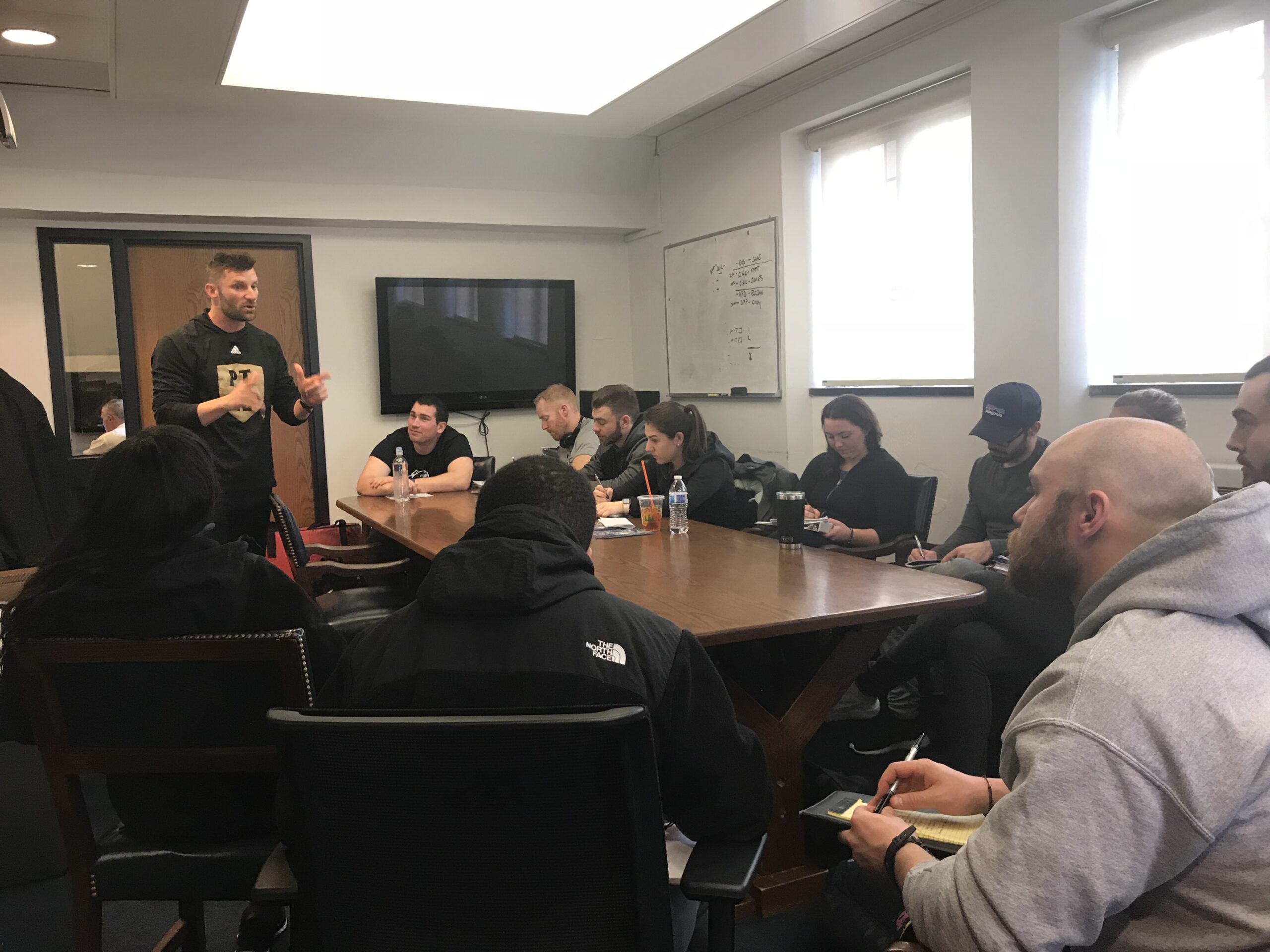
Teaching coaches during a workshop
The Direct Tie To All 10 Pillars
Pillar 4 is Self-Control and Discipline.
Pillar 1, Elite Mindset, treats a lapse as data rather than identity.
Pillar 2, Motivation and Commitment, connects discipline to purpose.
Pillar 3, Focus and Awareness, recognizes cues and impulses early.
Pillar 5, Process Over Outcome, defines success through controllable actions.
Pillar 6, Mental Imagery and Meditation, rehearses choosing the standard before difficult moments.
Pillar 7, Routines and Habits of Excellence, reduces reliance on willpower.
Pillar 8, Time Management and Organization, prepares the environment and calendar.
Pillar 9, Leadership, models character and keeps promises to the group.
Pillar 10, The Right Culture, makes standards consistent, visible, and shared.
Common Mistakes
Mistake one is treating discipline as punishment.
Mistake two is defining only what must stop without a replacement response.
Mistake three is relying on willpower while ignoring environment.
Mistake four is demanding perfection and turning one lapse into identity.
Mistake five is confusing fear-based compliance with ownership.
Train the choice. Design the path. Reinforce the restart.
A Seven-Day Discipline Plan
Day one: choose one behavior and define the standard precisely.
Day two: map the cue, impulse, response, and short-term reward.
Day three: create a replacement behavior.
Day four: improve Motivation, Ability, and Prompt.
Day five: practice the response at low intensity.
Day six: add pressure and use an accountability partner.
Day seven: review evidence with Start, Stop, Continue and recommit to the next week.
Implementation Notes for Coaches
The fastest way to install self-control and discipline is to translate the idea into behavior that a camera could capture.
For this topic, look for awareness of the impulse, a preselected replacement behavior, and follow-through on the standard.
Explain why those behaviors matter, demonstrate them, let the athlete personalize the language, and then evaluate the response in practice.
If the standard remains abstract, athletes will agree with it in a meeting and lose it when emotion, fatigue, uncertainty, or consequence enters the environment.
Use a simple progression: teach the response when the athlete is calm, rehearse it in a normal drill, and then pressure-test it.
One practical option is to add fatigue and distraction gradually while athletes practice pausing, naming the impulse, and executing the replacement response.
Keep the feedback tied to the controllable behavior. Ask,
- What did you do well?
- What could you do better?
- How will you make that improvement on the next rep?
That Well-Better-How review protects accountability while keeping the athlete connected to growth.
This is also where Pillar 4 — Self-Control and Discipline becomes part of the daily culture instead of a lesson athletes hear once.
Model the response as a coach, reinforce it when the outcome is good and when it is not, and measure improvement over time.
Do a little a lot. Repetition makes the response available when the athlete needs it most.
The Standard Going Forward
Self-control is the space between impulse and action. Discipline is the choice that honors the standard inside that space.
Make the standard clear. Connect it to purpose. Recognize the cue. Replace the habit. Design the environment. Practice small promises. Never miss the restart.
You do not get discipline by labeling athletes. You build it one intentional response and one kept promise at a time.
Your Next Step!
If you are a coach looking to master mental performance coaching, the missing link in your clients’ and athletes’ performance, join my MPM Coaches Insiders List and receive my best strategies for coaching mental performance and save $200 off my MPM Certification Course when it opens this fall.
💻 Join my MPM Coaches Certification Insiders List & Save $200
👍 Take my FREE 3 Day Coaches Mini-Course