Every coach wants a championship culture. But culture is one of those words that gets used so often it can lose its meaning. Culture is not the slogan painted on the wall. It is not the values printed in the media guide. Culture is what your people repeatedly do—especially when the coach is not watching, the team is tired, and the result is not going their way.
A championship team can win once because it has talent. A championship culture gives a program the best chance to contend year after year because the standards survive changing lineups, changing schedules, and changing circumstances.
Today I will show you how to build that kind of culture through Pillar 10 of the Mental Performance Mastery system: The Right Culture. We will identify the culture-killers, define the behaviors that bring your values to life, create a system for accountability, and connect culture to all ten pillars. Because culture is not something you have. Culture is something you do.
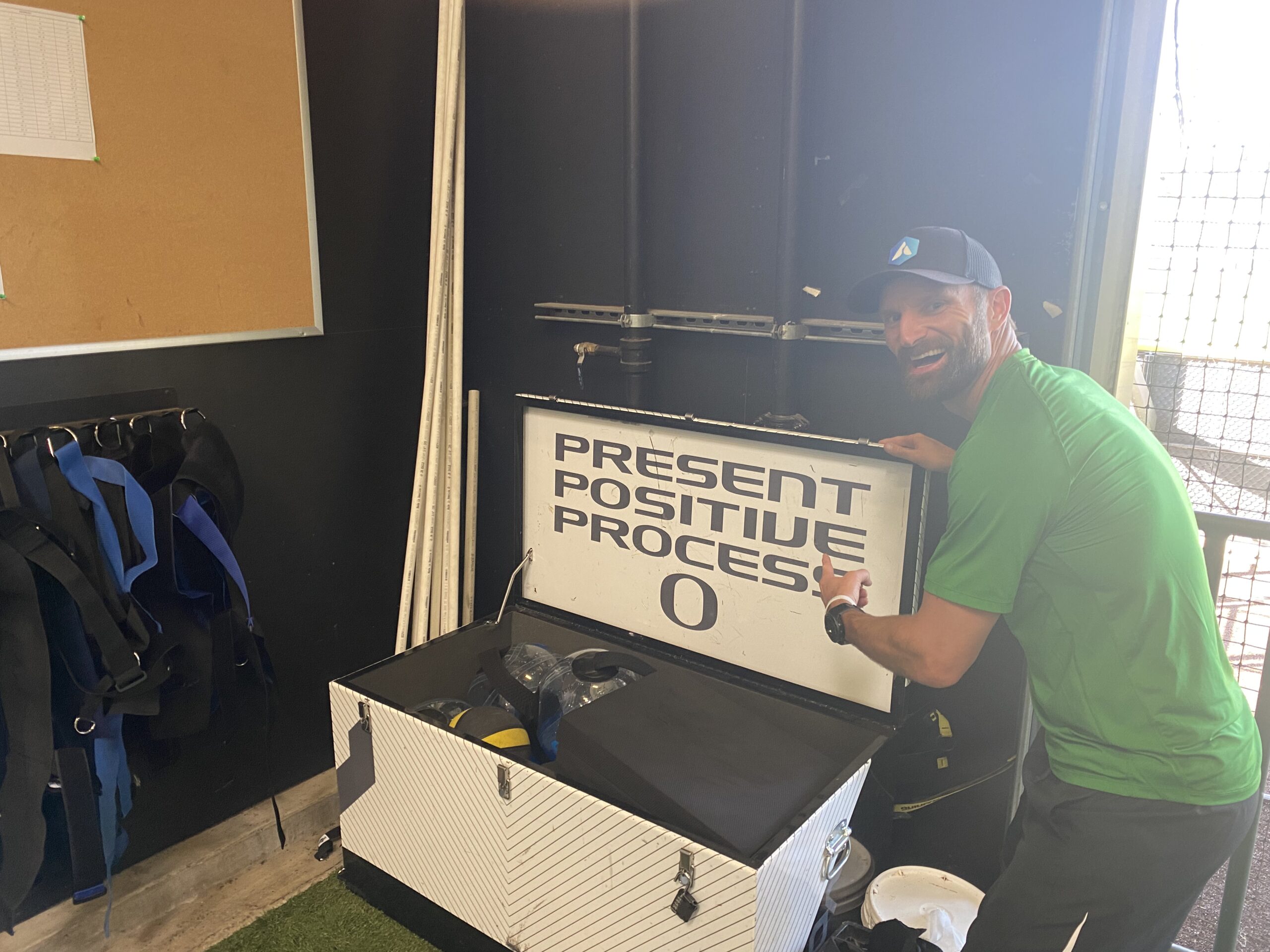
Helping establish the University of Oregon Baseball Culture of Present, Process, Positive
What Culture Really Is
Culture is the collective habits of a group. It is the language people use. It is what gets praised. It is what gets corrected. It is what the team tolerates.
It is how the group responds after adversity. If you want to understand a team’s real culture, do not begin with the mission statement.
Watch a difficult practice.
- Does a player blame a teammate after a mistake?
- Does the bench stay connected when the team is behind?
- Does the best athlete accept coaching?
- Does somebody pick up the equipment when there is no reward for doing it?
Those behaviors tell the truth. Championship culture is not built by one emotional meeting.
It is built when clear standards become repeated behavior, repeated behavior becomes habit, and habit becomes identity.

Result of our work with LSU Softball Core Principles of TIGERS in their team meeting room.
The Three Culture Killers (BCD)
There are three patterns that quietly destroy culture.
#1 The first is BCD: blaming, complaining, and getting defensive.
Blaming gives your power away.
Complaining spreads attention toward what is wrong without creating a response.
Defensiveness makes coaching feel like an attack instead of information.
When BCD becomes normal, accountability disappears.
#2 The second culture killer is Me Over We. This shows up when an athlete’s mood depends on playing time, statistics, recognition, or role. The team may say “family,” but behavior says, “I am committed when this serves me.”
#3 The third is the energy sucker. Every person affects the room. Some people add connection, urgency, and belief. Others drain it through body language, sarcasm, gossip, or chronic negativity. You do not have to demand fake enthusiasm.
You do have to establish that every athlete is responsible for the energy they bring.
One of the simplest tools I teach is The High Five Zone. When teammates enter the team space, connect. Look people in the eye. Say their name. Give a high five, fist bump, or intentional greeting. It sounds small because it is small. Small is good when it is repeatable. Connection before correction creates a better environment for truth, coaching, and accountability.
From Words To Behaviors
The biggest culture mistake is choosing attractive values without defining what they look like. A team says, “We value toughness.” What does toughness mean on your team? Is it playing injured? That definition can be dangerous. Or is toughness receiving feedback without defensiveness, sprinting into position when tired, and staying connected after a mistake?
A team says, “We value discipline.” Does that mean arriving early, putting phones away, completing recovery, and doing the routine with detail?
If a value cannot be seen, heard, or measured, it cannot be consistently coached.
That is why I use the Team MVP process. MVP stands for mission, vision, and principles.
Step one: clarify the mission. Why do we exist beyond winning?
Step two: clarify the vision. What are we committed to becoming?
Step three: choose a small set of core principles that guide decisions.
Step four: define above-the-line and below-the-line behaviors for each principle. If the principle is “together,” above-the-line behaviors might include direct communication, celebrating teammates, and confronting problems respectfully. Below-the-line behaviors might include gossip, eye rolling, cliques, and blame.
Step five: assess honestly and build an intentional growth plan using Start, Stop, Continue. What behavior will we start? What will we stop? What must we continue? Now culture has moved from a poster to a practice.

Living Present, Process and Positive on a early am culture hike with The University of Oregon Baseball
A Composite Team Example
Consider a composite example drawn from patterns I have seen across high-performance teams.
A talented program kept falling short late in the season.
The coaches believed the problem was pressure.
The athletes believed the problem was inconsistent leadership.
Everyone wanted more accountability, but nobody had defined what that meant.
They chose three principles: compete, connect, and respond.
Then they defined the behaviors. Compete meant full effort on the current rep and honest recovery between reps.
Connect meant direct communication, purposeful greetings, and visible support for teammates in every role.
Respond meant no BCD, a reset routine after mistakes, and the next best decision. At the end of practice, athletes rated one behavior from each principle.
Partners gave one piece of evidence—not a vague score.
“You were a nine today” became, “You came off the bench after not starting, made eye contact with the starter, and gave her the scouting reminder before the first possession.”
The evidence mattered. Within weeks, the language changed.
Coaches spent less time policing attitude because athletes had a shared way to name behavior.
The scoreboard did not improve because of a magical slogan. It improved because daily interactions became more aligned with the standard. That is what culture work looks like.
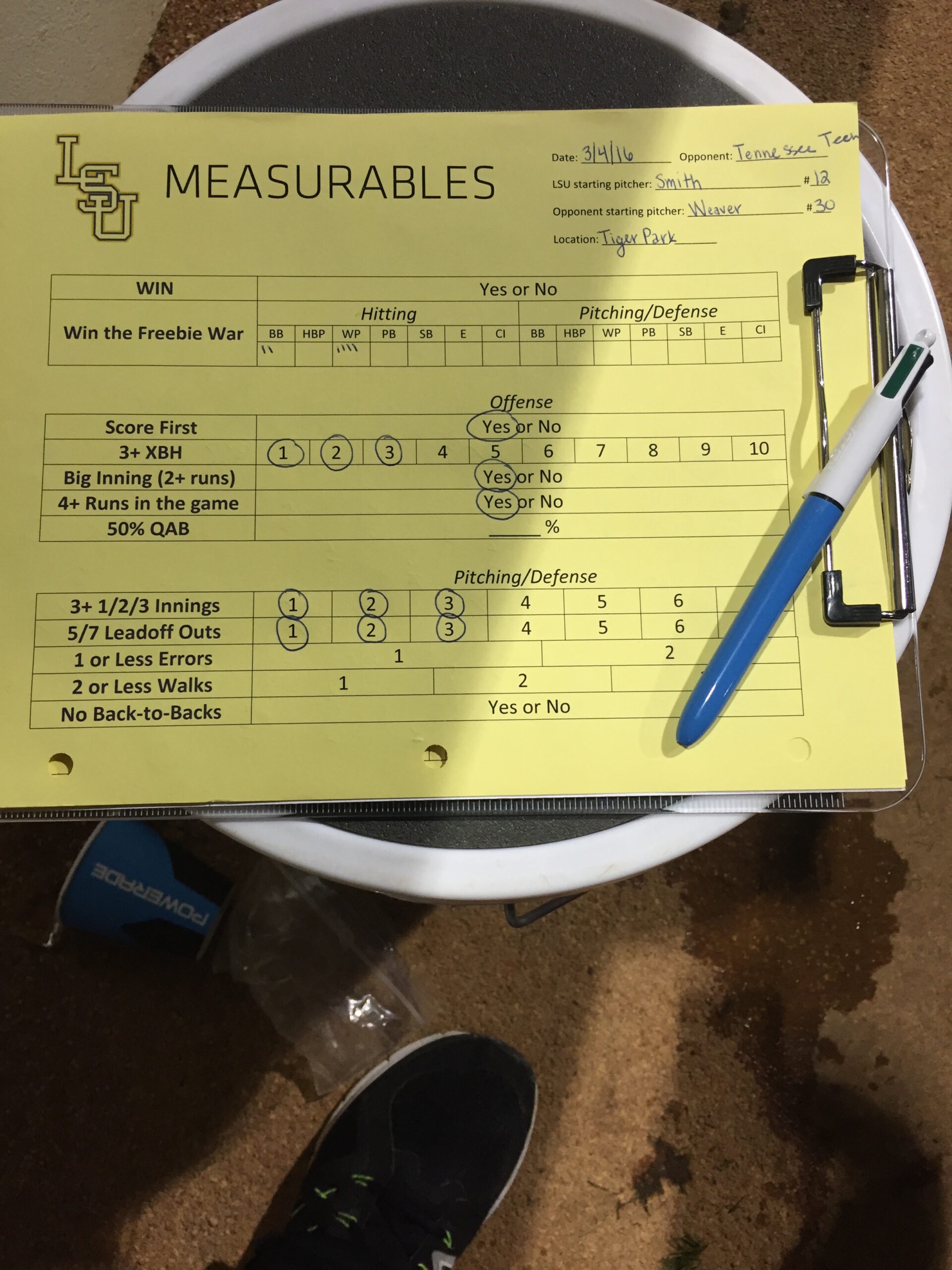
LSU Softball In-Game Culture Measurable Goals that Tie Back to TIGERS
How To Create Accountability Without Fear
Accountability is not punishment. Accountability is a commitment to help each other close the gap between what we said matters and what we actually did.
Fear-based accountability can create short-term compliance, but it also creates hiding. Athletes learn to look good in front of the coach instead of getting honest about what needs work.
Championship accountability has three parts.
First: connection. People receive hard truth better from someone they know is for them.
Second: clarity. Correct a defined behavior, not a person’s character.
Third: consistency. The standard applies to the star, the reserve, and the coach. Use a simple feedback sentence: “The standard is blank. I observed blank. The next response is blank.” “The standard is present-moment communication.
I observed you stop talking after the turnover. Your next response is one breath, eyes up, and call the coverage.” Direct. Behavioral. Forward-looking.
Coaches must model this too. If you make a poor decision, own it publicly. If your body language drops, reset it. If you demand punctuality, begin and end meetings on time. The culture follows what leadership repeatedly demonstrates.
Build Culture Into The Calendar
If culture only lives in preseason meetings, performance pressure will erase it.
Put culture on the schedule.
Use a two-minute principle reminder before practice. Choose one behavior to emphasize during practice. Recognize evidence afterward. Use weekly boat crews or accountability partners for honest reflection.
Ask three questions:
- Where did I live the standard?
- Where did I drift below the line?
- What will I do next?
Spaced repetition matters. Do a little a lot. You do not need a forty-minute culture meeting every day. You need small, consistent touches that keep language and behavior alive.
The Direct Tie To All 10 Pillars
Pillar 10: The Right Culture, but culture is the environment where all the other pillars either grow or disappear.
Pillar 1: Elite Mindset, creates ownership and curiosity rather than victim thinking.
Pillar 2: Motivation and Commitment, connects personal purpose to the team’s mission and sustains behavior when emotion fades.
Pillar 3: Focus and Awareness, helps people notice whether their attention and energy support the standard.
Pillar 4: Self-Control and Discipline, makes values visible through choices.
Pillar 5: Process Over Outcome, keeps the culture stable when wins and losses fluctuate.
Pillar 6: Mental Imagery and Meditation, lets athletes rehearse how they will respond in difficult team moments.
Pillar 7: Routines and Habits of Excellence, turns principles into repeated daily actions.
Pillar 8: Time Management and Organization, shows respect for the group and protects preparation. Pillar 9, Leadership, multiplies the standard through connection, character, competence, consistency, communication, and courage. Pillar 10 integrates all of it into the way we do things here.
Common Mistakes
Mistake #1 is copying another program’s values. Your principles must be true to your mission and meaningful to your people.
Mistake #2 is adding too many standards. If athletes cannot remember them under pressure, they cannot live them. Keep the language simple and the behaviors specific.
Mistake #3 is treating culture as the coach’s property. Invite athletes to help define the behaviors. Ownership creates buy-in.
Mistake #4 is confusing comfort with connection. A connected team can have hard conversations. In fact, real connection creates the courage for honest correction.
Mistake #5 is allowing talent to create exceptions. Every exception teaches the team what you truly value.
A Seven-Day Culture Reset
Day 1: ask every person to describe the current culture in three words and the desired culture in three words.
Day 2: identify the two behaviors creating the biggest gap.
Day 3: clarify mission, vision, and three core principles.
Day 4: define above-the-line and below-the-line behaviors for each principle.
Day 5: install a connection habit such as the High Five Zone and an accountability sentence.
Day 6: use Start, Stop, Continue with players and staff.
Day 7: select one behavior to measure for the next four weeks and decide how evidence will be recognized. Then repeat. Culture grows through clarity, repetition, and honest reinforcement.
Implementation Notes for Coaches
The fastest way to install championship culture is to translate the idea into behavior that a camera could capture.
For this topic, look for shared standards, peer-to-peer accountability, and consistent responses to both success and failure. Explain why those behaviors matter, demonstrate them, let the athlete personalize the language, and then evaluate the response in practice. If the standard remains abstract, athletes will agree with it in a meeting and lose it when emotion, fatigue, uncertainty, or consequence enters the environment.
Use a simple progression: teach the response when the athlete is calm, rehearse it in a normal drill, and then pressure-test it.
One practical option is to choose one team standard, rehearse what it looks and sounds like in a hard practice moment, and have athletes correct it together without fear. Keep the feedback tied to the controllable behavior.
Ask, “What did you do well? What could you do better? How will you make that improvement on the next rep?”
That Well-Better-How review protects accountability while keeping the athlete connected to growth.
This is also where Pillar 10 — The Right Culture becomes part of the daily culture instead of a lesson athletes hear once.
Model the response as a coach, reinforce it when the outcome is good and when it is not, and measure improvement over time.
Do a little a lot. Repetition makes the response available when the athlete needs it most.
The Standard Going Forward
Championship culture is not built when everybody feels good.
It is revealed when the game turns, the role changes, the call goes against you, and somebody must choose between self-protection and the team standard.
Your job is to make that choice easier through shared language, defined behavior, practiced routines, and consistent leadership.
Eliminate BCD. Choose we over me.
Protect the energy of the environment. Connect before you correct. Turn values into visible actions.
And remember: culture is not the sign on the wall. Culture is what we repeatedly tolerate, celebrate, and do. Build it one interaction, one standard, and one next best response at a time.
Your Next Step!
If you are a coach looking to master mental performance coaching, the missing link in your clients’ and athletes’ performance, join my MPM Coaches Insiders List and receive my best strategies for coaching mental performance and save $200 off my MPM Certification Course when it opens this fall.
💻 Join my MPM Coaches Certification Insiders List & Save $200
👍 Take my FREE 3 Day Coaches Mini-Course